What is the Gini Index?
- The Gini Index measures the distribution of income, wealth, or consumption across a population.
- Score: It ranges in value from 0 to 100. A score of 0 represents perfect equality, while a score of 100 reflects absolute inequality, where one individual holds all the resources.
- A lower Gini Index indicates a more equal distribution of income, while a higher score reflects greater inequality within a country.
How It Measures Inequality?
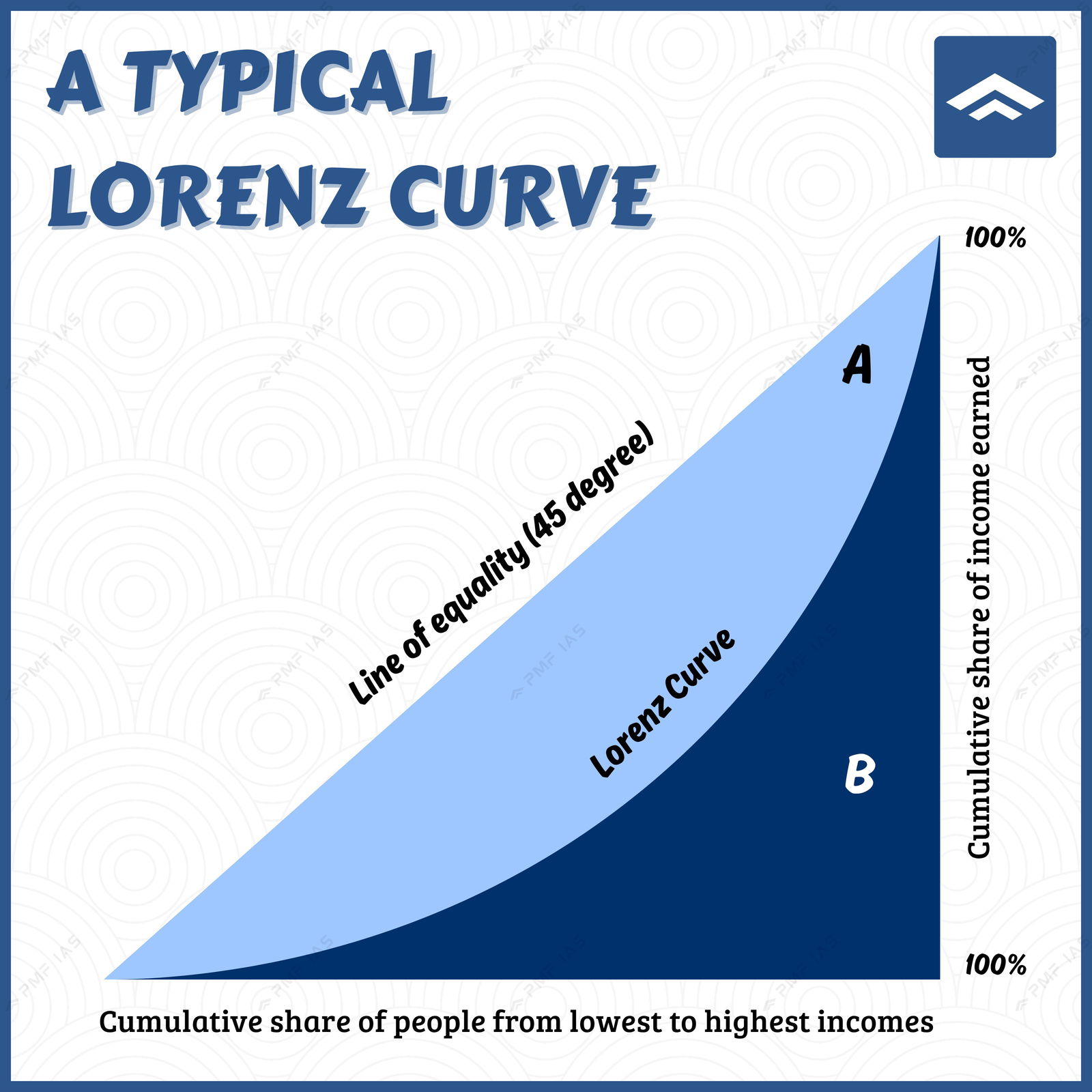
- The Gini index measures the area between the Lorenz curve and a hypothetical line of absolute equality, or the gap between the two, expressed as a percentage of the maximum area under the line of absolute equality.
- The larger the gap, the more unequal the income distribution. This provides a clear number to show how income is fairly distributed.
About Lorenz Curve
- A Lorenz curve plots the cumulative percentages of total income received against the cumulative number of recipients, starting with the poorest individual or household.
- A diagonal line will show a perfectly equal distribution, while the Lorenz curve will show the actual distribution.
|


