Atmospheric Rivers | Pineapple Express
- Context (IE): The recent storm that hit California was fuelled by an atmospheric river, including the Pineapple Express.
- It marks the second atmospheric river event to affect California recently, following another system that caused significant rainfall and snow in the San Francisco Bay Area.
Atmospheric River
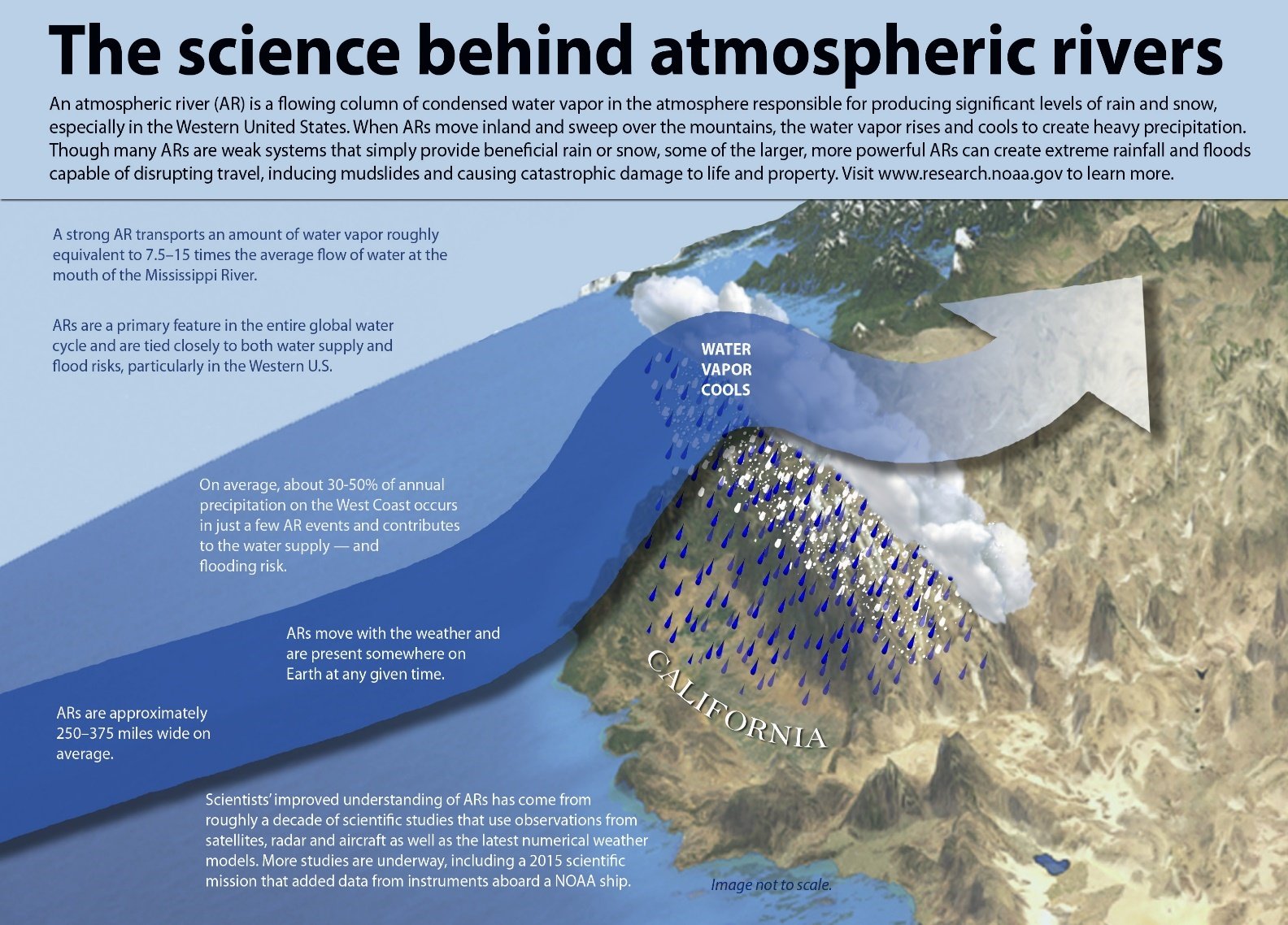
- An atmospheric river is a long, relatively narrow band of water vapour that forms over an ocean and flows through the sky, transporting moisture from the tropics to northern latitudes.
- They are formed by winds associated with cyclones and move under the influence of other weather patterns.
- It ranges from 250-375 miles in width.
- While many atmospheric river events are weak, powerful ones can carry extraordinary amounts of moisture.

When an Atmospheric River Reaches the Land

- As the moisture-laden air moves over mountain ranges, the water vapour rises and cools.
- This cooling results in heavy precipitation that falls as rain or snow.
- Unlike traditional cold winter storms, atmospheric rivers tend to be warm.
- While snow may still fall at the highest elevations, rain usually falls on the snowpack at lower elevations.
- This rapid melting can lead to runoff, flooding, and a decrease in the snowpack needed for California’s water supply.
Uses of Atmospheric Rivers
- Replenish Water: Essential for refilling water sources in arid regions.
- Wildfire Mitigation: Provide rainfall to help extinguish wildfires.
Impacts of Atmospheric Rivers
- Causes significant flooding, especially after consecutive events.
- Trigger debris flows and mudslides in saturated areas.
- Boost snowpack levels, crucial for water supply.
- Impact global ecosystems and water balance.
|
Pineapple Express
- The term “Pineapple Express” refers to a strong atmospheric river originating in the tropical Pacific near Hawaii.
- When the Pineapple Express reaches the West Coast, it can bring intense rainfall, sometimes dumping as much as five inches of rain on California in a single day.
| It is named for its moisture trail extending to Hawaii’s pineapple region. |