UPSC CSE Prelims Previous Year Questions (PYQs) – 2017

Additional Information
|
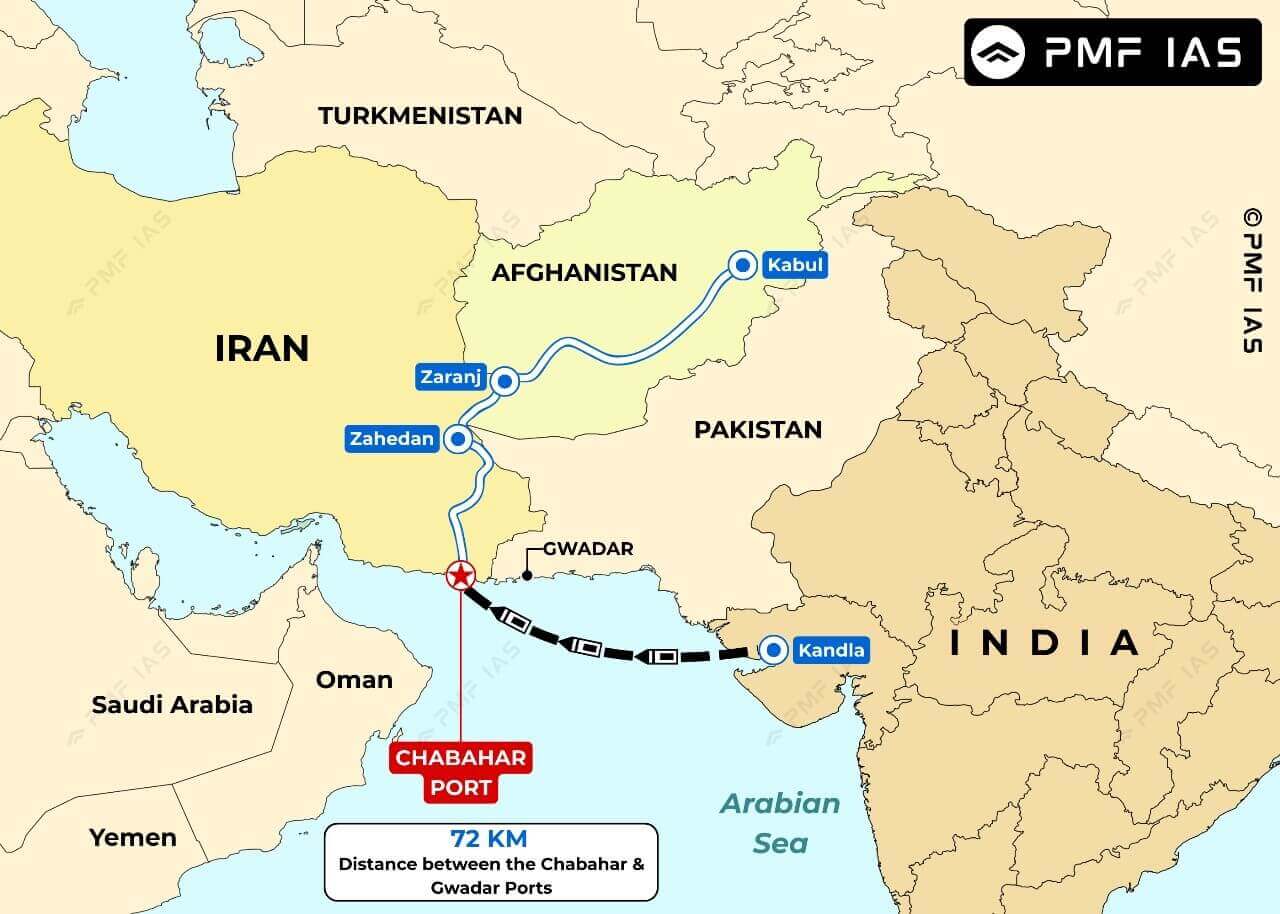
Answer: (c) India will not depend on Pakistan for access to Afghanistan and Central Asia; Difficulty Level: Easy
In India, it is legally mandatory for which of the following to report on cyber security incidents?
- Service providers
- Data centres
- Body corporate
Select the correct answer using the code given below:
- 1 only
- 1 and 2 only
- 3 only
- 1, 2 and 3
Explanation
All are correct
- Any service provider, intermediary, data centre, body corporate and Government organisation shall mandatorily report cyber incidents to Indian Computer Emergency Response Team (CERT-In) within 6 hours of noticing such incidents or being brought to notice about such incidents.
Additional Information
|
Answer: (d) 1, 2 and 3; Difficulty Level: Easy
Right to vote and to be elected in India is a
- Fundamental Right
- Natural Right
- Constitutional Right
- Legal Right
Explanation
Option (c) is correct
- The right to vote is a constitutional right under Article 326 of the IC. To exercise this right, citizens must reach the age of 18. By the Sixty-first constitutional amendment act of 1988, the voting age of elections to the LS and legislative assemblies of States has been lowered from 21 to 18 years.
The debate around Right to vote
|
Answer: (c) Constitutional Right; Difficulty Level: Medium
What is the purpose of ‘evolved Laser Interferometer Space Antenna (eLISA)’ project?
- To detect neutrinos
- To detect gravitational waves
- To detect the effectiveness of missile defence system
- To study the effect of solar flares on our communication systems
Explanation
Option (b) is correct
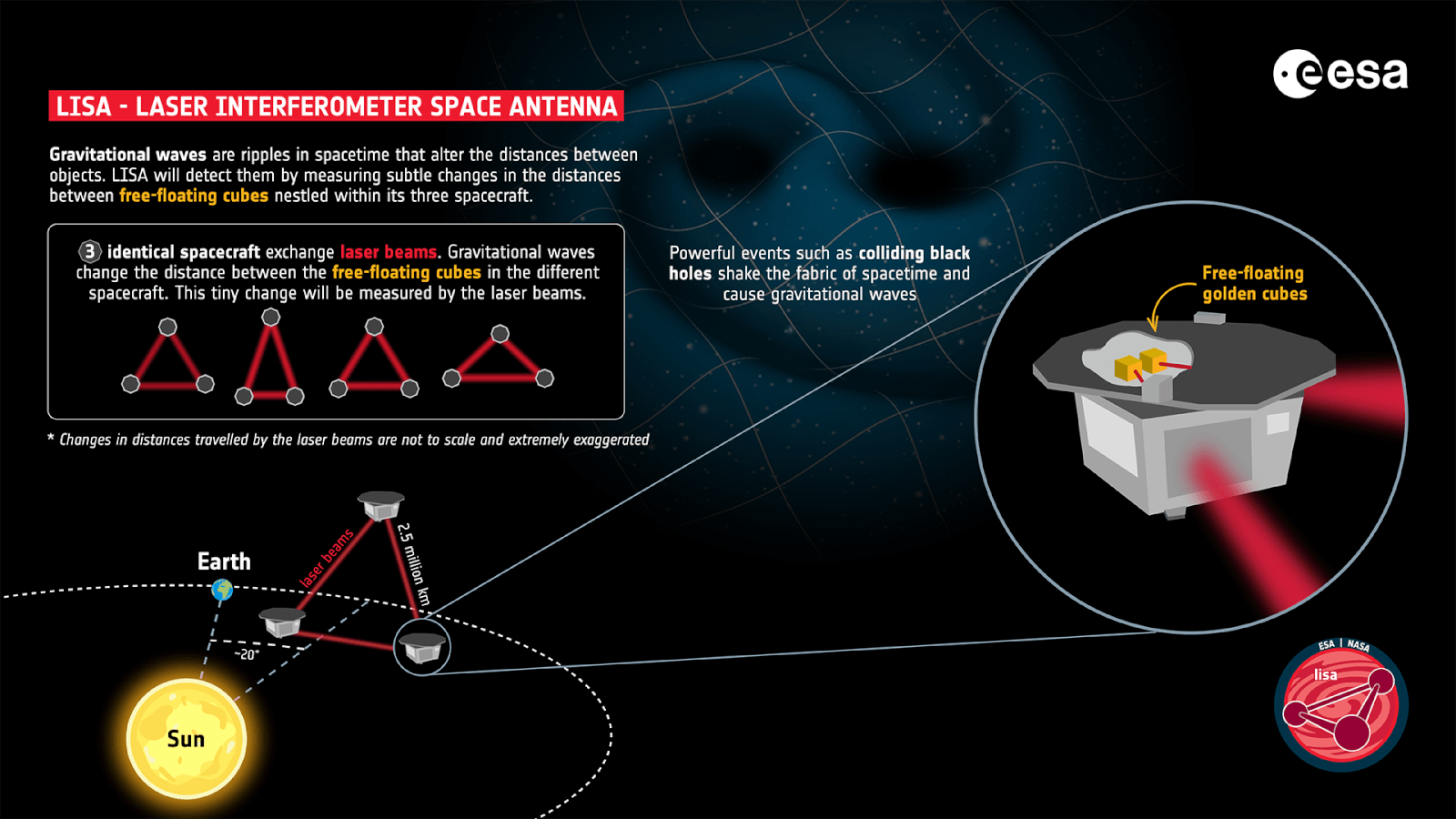
- eLISA (evolved Laser Interferometer Space Antenna) is a mission to study gravitational waves in space. It involves three spacecraft—one mother and two daughter spacecraft—in a triangular formation.

Image Source: NASA
- Gravitational waves were first theorized by Albert Einstein. They are created during events such as supermassive black hole mergers, or collisions between two black holes that are billion times bigger than our Sun. These collisions are so powerful that they create distortions in spacetime, known as gravitational waves.
- Forebears: LISA builds on the success of LISA Pathfinder and the US-based Laser Interferometer Gravitational-Wave Observatory (LIGO).
- LISA Pathfinder, launched in late 2015 and operational until mid-2017, successfully paved the way for LISA by demonstrating the key technologies needed for a large gravitational wave observatory to operate in space.
- Partnership: Led by ESA, the LISA mission is a collaboration between ESA, NASA, and an international consortium of scientists (the LISA consortium).
- Planned launch: 2035

Answer: (b) To detect gravitational waves; Difficulty Level: Medium
What is the purpose of ‘Vidyanjali Yojana’?
- To enable the famous foreign educational institutions to open their campuses in India.
- To increase the quality of education provided in government schools by taking help from the private sector and the community.
- To encourage voluntary monetary contributions from private individuals and organizations so as to improve the infrastructure facilities for primary and secondary schools.
Select the correct answer using the code given below:
- 2 only
- 3 only
- 1 and 2 only
- 1, 2 and 3
Explanation
Only statement 2 is correct
- Vidyanjali is an initiative of Department of School Education and Literacy, Ministry of Education, for facilitating the community and volunteers to directly connect with the government and government-aided schools to contribute their services and/or assets/ materials/equipments through a dedicated online portal.
- Vidyanjali Yojana is not aimed at attracting foreign universities to set up campuses in India. Although volunteer participation may indirectly improve infrastructure, the scheme primarily focuses on non-monetary support rather than financial contributions for infrastructure development.
Answer: (a) 2 only; Difficulty Level: Hard
What is the aim of the programme `Unnat Bharat Abhiyan’?
- Achieving 100% literacy by promoting collaboration between voluntary organizations and the government’s education system and local communities.
- Connecting institutions of higher education with local communities to address development challenges through appropriate technologies.
- Strengthening India’s scientific research institutions in order to make India a scientific and technological power.
- Developing human capital by allocating special funds for health care and education of rural and urban poor, and organizing skill development programmes and vocational training for them.
Explanation
Option (b) is correct
- Unnat Bharat Abhiyan (launched in 2014) is a flagship program of the Ministry of Education.
- Objectives:
- It aims to link the Higher Education Institutions (HEIs) with a set of at least (5) villages, so that these institutions can contribute to the economic and social betterment of these village communities using their knowledge base
- To engage the faculty and students of Higher Educational Institution in understanding rural realities.
- To identify & select existing innovative technologies, enable customization of technologies, or devise implementation method for innovative solutions, as per the local needs.
- To leverage the knowledge base of the institutions to devise processes for effective implementation of various government programmes.
Answer: (b) Connecting institutions of higher education with local communities to address development challenges through appropriate technologies; Difficulty Level: Medium
Consider the following statements:
- The Election Commission of India is a five-member body.
- Union Ministry of Home Affairs decides the election schedule for the conduct of both general elections and bye-elections.
- Election Commission resolves the disputes relating to splits/mergers of recognised political parties.
Which of the statements given above is/are correct?
- 1 and 2 only
- 2 only
- 2 and 3 only
- 3 only
Explanation
Statement 1 is incorrect
- Election Commission is a permanent, all-India, quasi-judicial and independent constitutional body established in 1950 to conduct and regulate elections in the country.
- Part XV and Article (324-329) of the constitution of India deal with elections and election commission.
- ECI administers elections to the Lok Sabha, Rajya Sabha, State Legislative Assemblies, State Legislative Councils and the offices of the President and Vice President of the country.
- The Election Commission comprises:
- A Chief Election Commissioner (CEC) and
- Two Election Commissioners (ECs).
Statement 2 is incorrect
- It is the Commission which decides the election schedules for the conduct of elections, whether general elections or bye-elections.
Statement 3 is correct
- The Election Symbols (Reservation and Allotment) Order, 1968 empowers the EC to recognise political parties and allot symbols.
- Under Paragraph 15 of the Order, it can decide disputes among rival groups or sections of a recognised political party staking claim to its name and symbol.
- Under Paragraph 15, the EC is the only authority to decide issues on a dispute or a merger. The Supreme Court upheld its validity in Sadiq Ali and another vs. ECI in 1971.
Answer: (d) 3 only; Difficulty Level: Hard
In India, if a species of tortoise is declared protected under Schedule I of the Wildlife (Protection) Act, 1972, what does it imply?
- It enjoys the same level of protection as the tiger.
- It no longer exists in the wild, a few individuals are under captive protection, and now it is impossible to prevent its extinction.
- It is endemic to a particular region of India.
- Both (b) and (c) stated above are correct in this context.
Explanation
Option (a) is correct
- Schedule I of the Act offers stringent protection to endangered species, such as the tiger, Clouded Leopard, Black Buck, Snow Leopard, and others. If a tortoise species is listed under Schedule I, it enjoys the same high level of protection as the tiger.
- Note: The Wildlife (Protection) Act, 1972, was amended in 2022, affecting the classification of wild animals. Earlier, there were six schedules, which were streamlined into four after the amendment.
- Schedule I: Animal species that receive the highest level of protection, including critically endangered species
- Schedule II: Animal species that receive a lower level of protection
- Schedule III: Protected plant species
- Schedule IV: Specimens listed in the Appendices under the Convention on International Trade in Endangered Species of Wild Fauna and Flora (CITES)
Answer: (a) It enjoys the same level of protection as the tiger; Difficulty Level: Hard
In India, Judicial Review implies
- the power of the Judiciary to pronounce upon the constitutionality of laws and executive orders.
- the power of the Judiciary to question the wisdom of the laws enacted by the Legislatures.
- the power of the Judiciary to review all the legislative enactments before they are assented to by the President.
- the power of the Judiciary to review its own judgements given earlier in similar or different cases.
Explanation
Option (a) is correct
- In India, Judicial Review empowers the judiciary, specifically the Supreme Court and High Courts, to examine whether laws enacted by the legislature or actions taken by the executive comply with the Constitution. If a law or order violates any constitutional provisions, the judiciary can declare it invalid or unconstitutional. This ensures that all actions of the state remain within the limits of the Constitution, safeguarding citizens’ rights and upholding the rule of law. Judicial Review thus acts as a check on arbitrary laws or executive actions.
Answer: (a) the power of the Judiciary to pronounce upon the constitutionality of laws and executive orders; Difficulty Level: Easy
With reference to Indian freedom struggle, consider the following events:
- Mutiny in Royal Indian Navy
- Quit India Movement launched
- Second Round Table Conference
What is the correct chronological sequence of the above events?
- 1-2-3
- 2-1-3
- 3-2-1
- 3-1-2
Explanation
Option (c) is correct
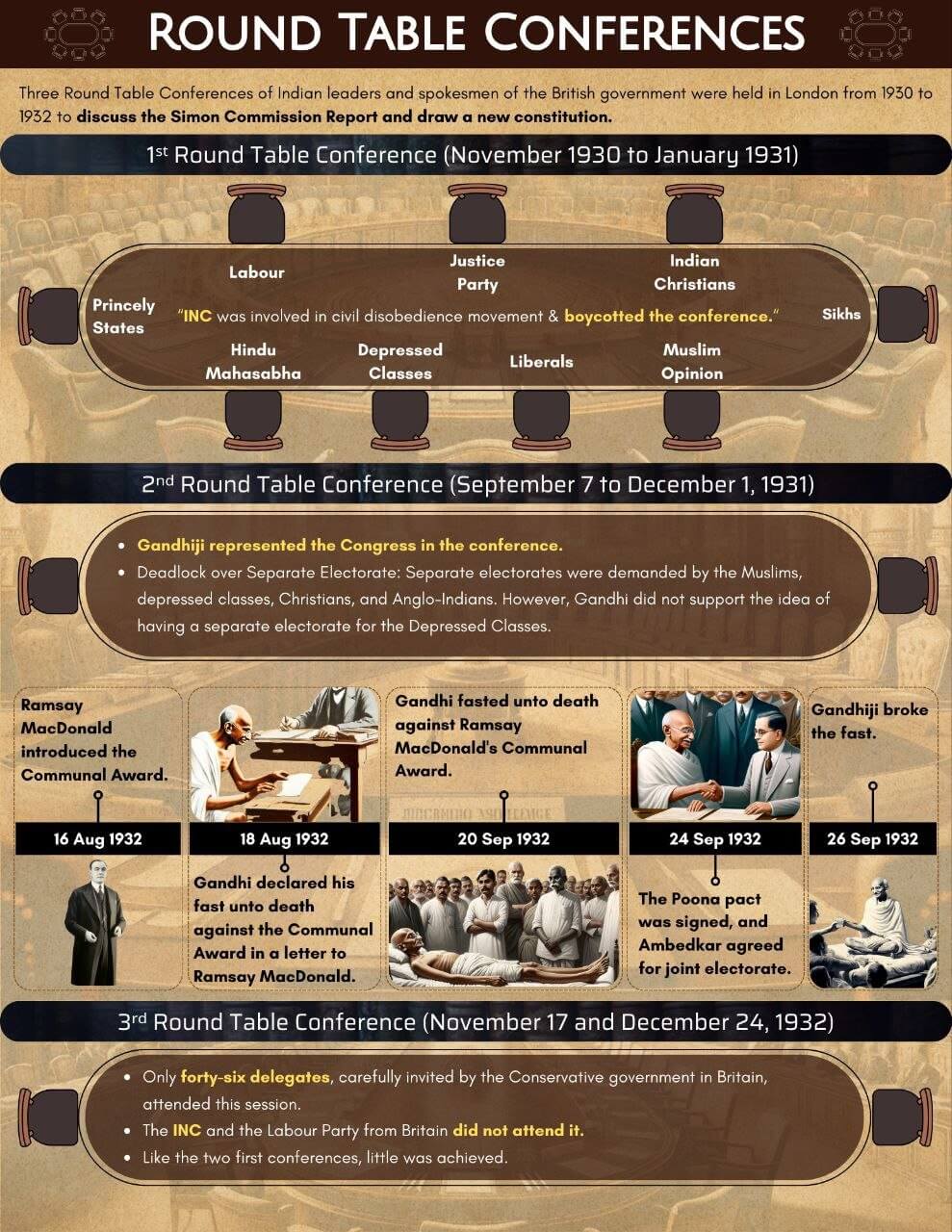
- The second Round Table Conference was held from September 7 to December 1, 1931.

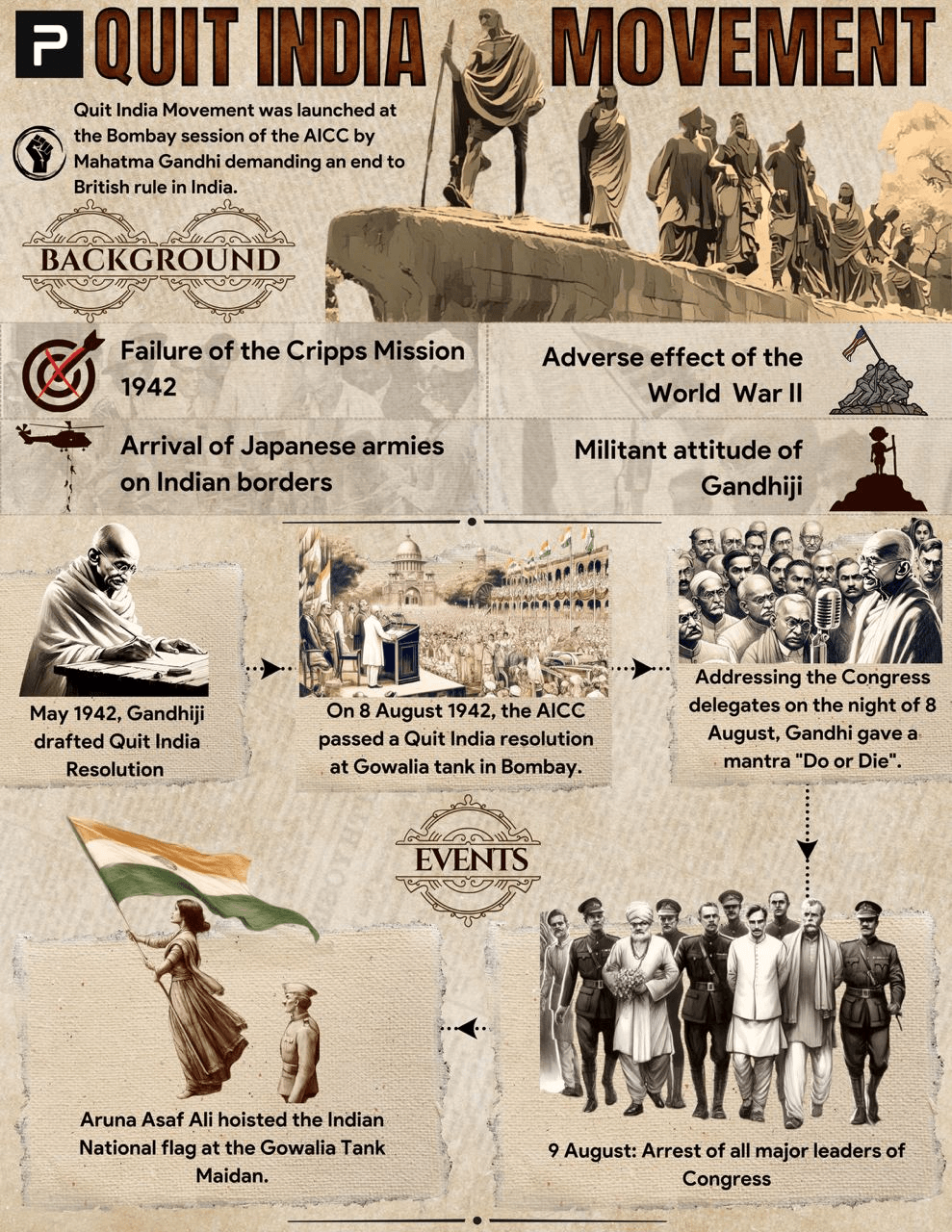
- On 8 August 1942, the AICC at Gowalia tank in Bombay, passed a historic Quit India resolution. The resolution demanded an immediate end to British rule in India

- On 18 February 1946, the ratings of “HMIS Talwar” in Bombay Harbour went on strike to protest against bad food and racial arrogance. The ratings appealed to the people and leaders for their assistance. However, despite their appeal, the leaders were absent, but many people came forward to help. The INC and the Muslim League condemned the mutiny, while the Communist Party of India was the only party that supported the rebellion.
Answer: (c) 3-2-1; Difficulty Level: Easy
Consider the following statements:
- Tax revenue as a percent of GDP of India has steadily increased in the last decade.
- Fiscal deficit as a percent of GDP of India has steadily increased in the last decade.
Which of the statements given above is/are correct?
- 1 only
- 2 only
- Both 1 and 2
- Neither 1 nor 2
Explanation
Statement 1 is incorrect
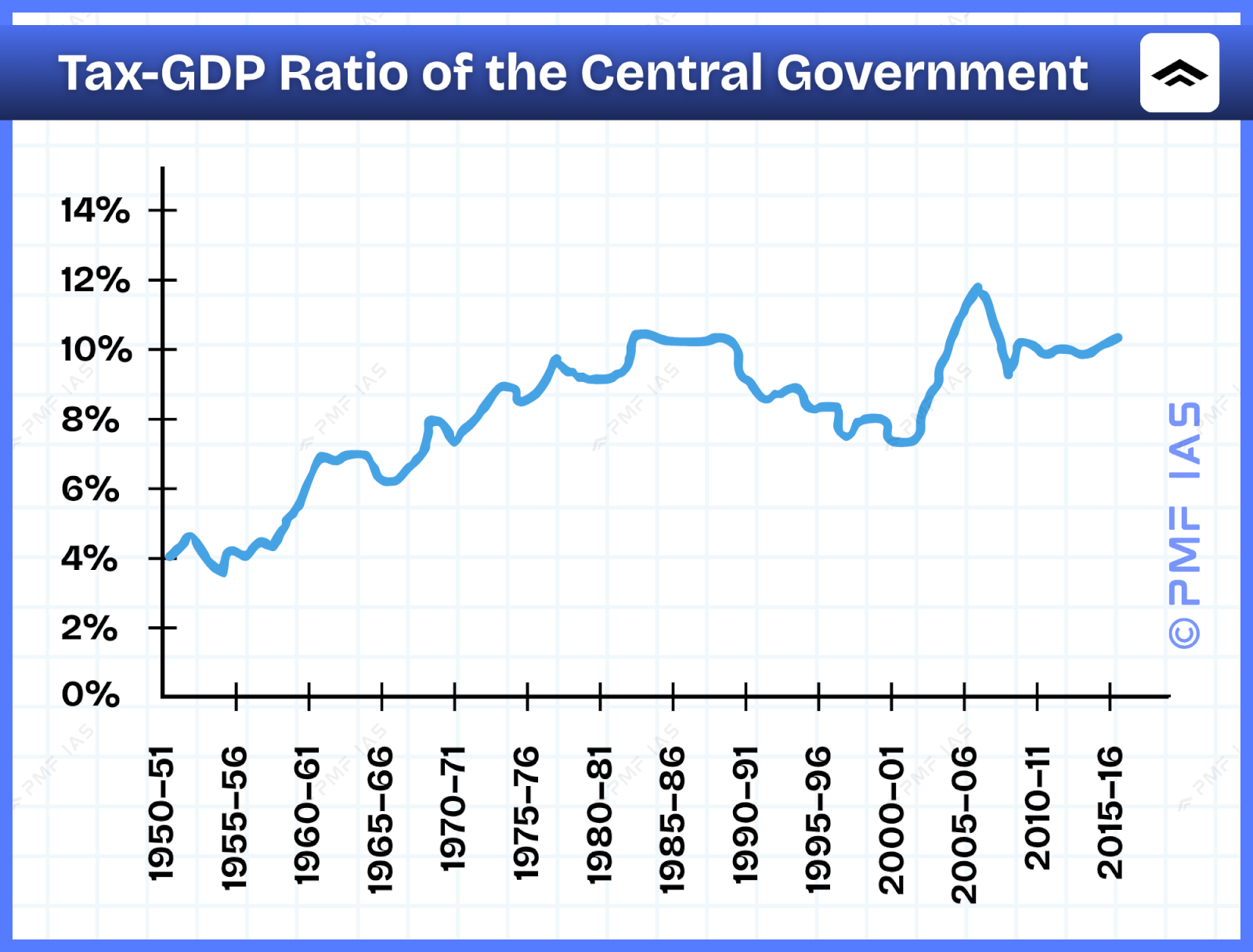
- The tax-to-GDP ratio of a country reflects the proportion of economic activity translating into tax collections for the government. It depends on various factors such as tax rates, number of taxpayers and tax exemptions. The revenue as a percent of GDP of India has not steadily increased as shown in graph below:

Statement 2 is incorrect
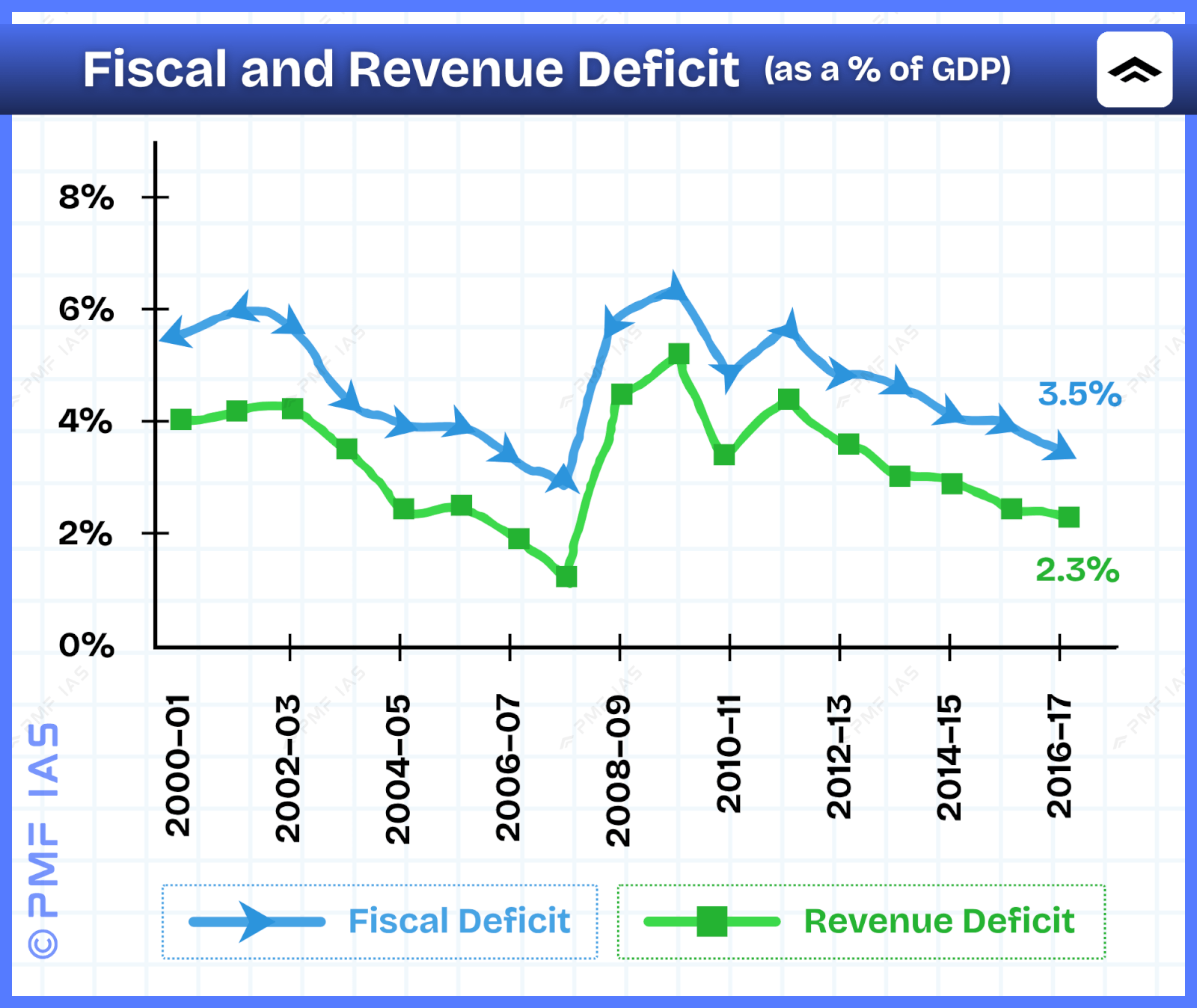
- Fiscal deficit indicates the borrowings of the government used to finance its expenditure. Fiscal deficit as a percent of GDP of India has not steadily increased in the last decade shown in figure given below:

Answer: (d) Neither 1 nor 2; Difficulty Level: Hard
Recently there was a proposal to translocate some of the lions from their natural habitat in Gujarat to which one of the following sites?
- Corbett National Park
- Kuno Palpur Wildlife Sanctuary
- Mudumalai Wildlife Sanctuary
- Sariska National Park
Explanation
Option (b) is correct
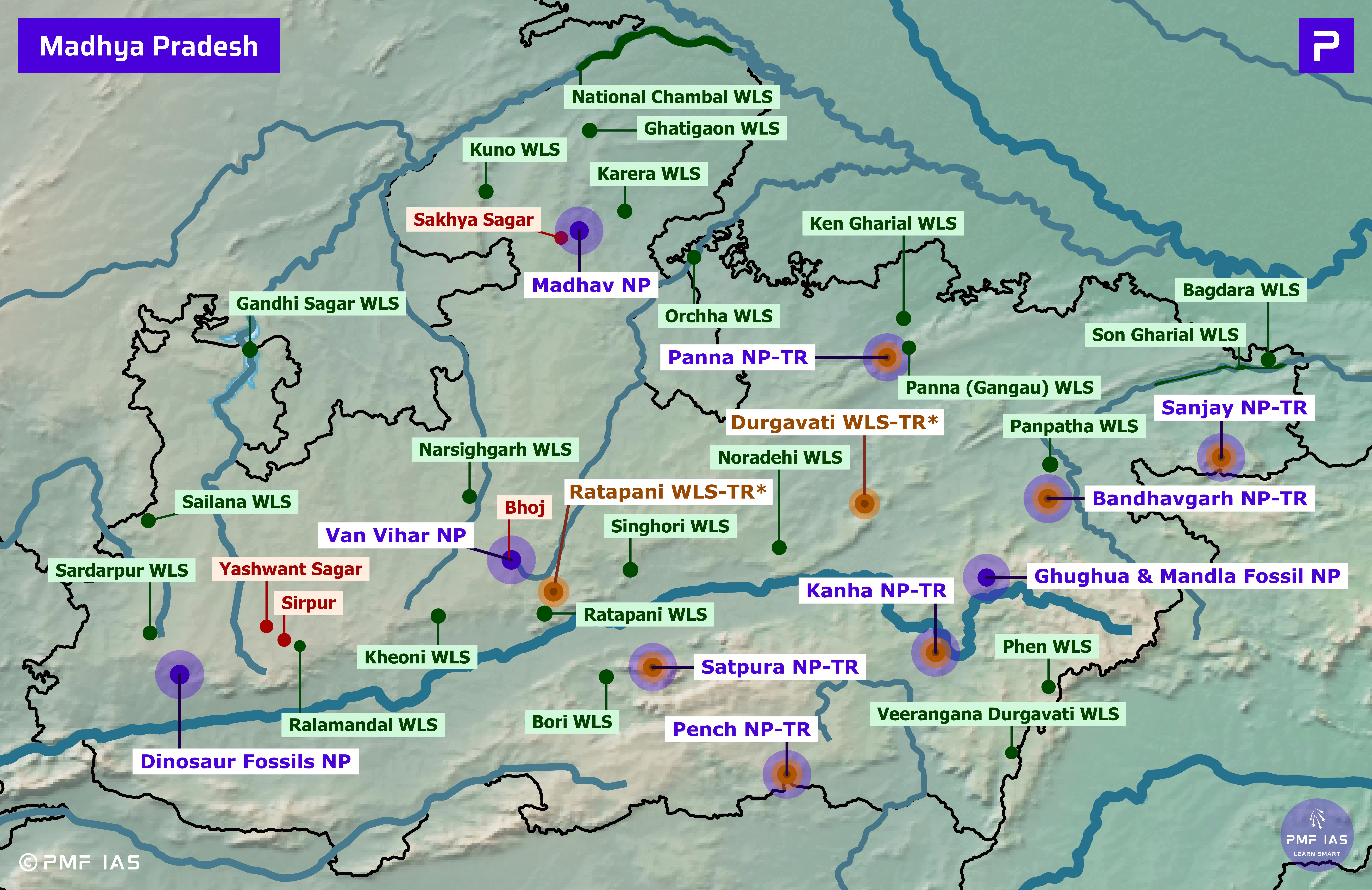
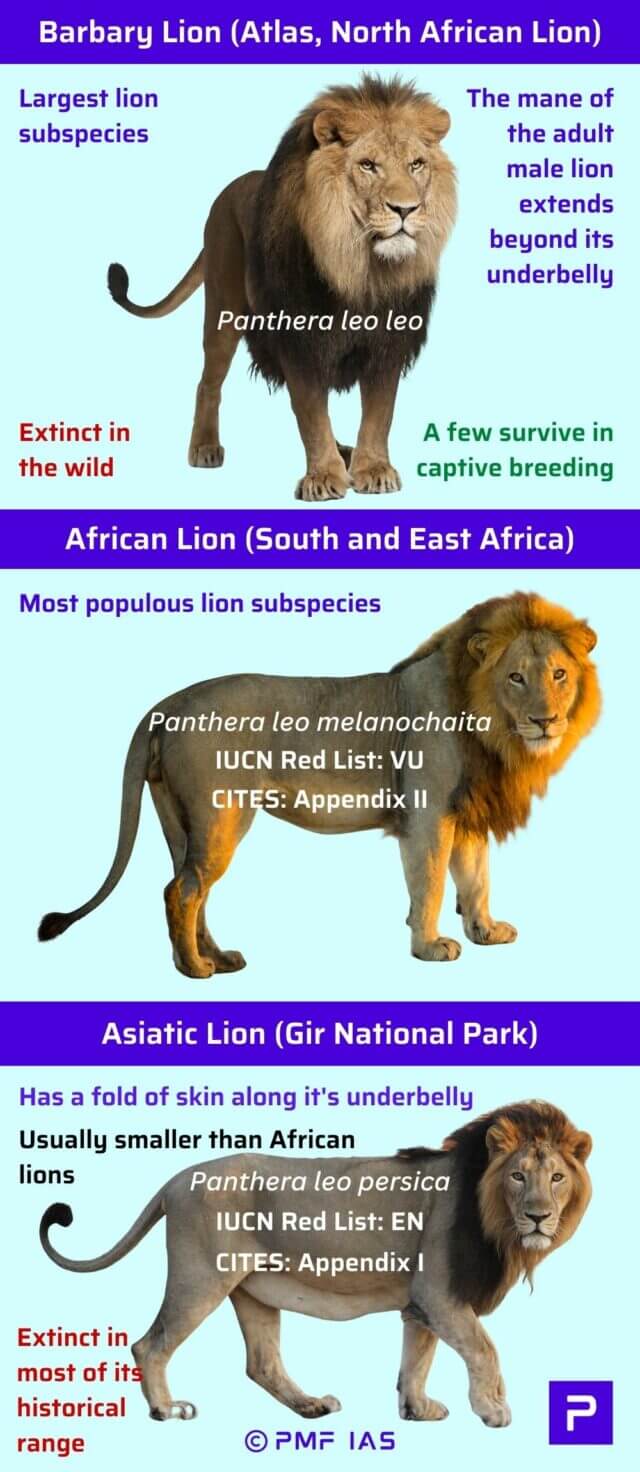
- Kuno Palpur in Madhya Pradesh was approved as the second home for Asiatic lions from Gir National Park, Gujarat, but Gujarat refused relocation until 33 studies mandated by the International Union for Conservation of Nature are completed.

Additional Information
|
Option (a) is incorrect
- Jim Corbett National Park, Corbett Tiger Reserve:
- It is the oldest National Park in India and is located in Nainital.
- Corbett Tiger Reserve’s core area is formed by Jim Corbett National Park, while the buffer contains Sonanadi Wildlife Sanctuary.
- Ramganga, Sonanadi and Kosi are the major rivers flowing through the National Park, and Ramganga Reservoir is located within the National Park.
- Major Fauna: Bengal tigers, elephants, leopards, Himalayan black bears, Himalayan goral, rhesus macaque.
- Corbett National Park is one of the thirteen protected areas covered by the World Wildlife Fund for Nature under their Terai Arc Landscape Program.
Option (c) is incorrect
- Mudumalai National Park, Tiger Reserve, Wildlife Sanctuary:
- It lies on the north-western side of the Nilgiri Hills (Blue Mountains), in Nilgiri district. It shares its boundaries with the states of Karnataka and Kerala.
- Vegetation: tropical moist deciduous, dry deciduous and dry thorn forests.
- Major Fauna: Indian elephant, Bengal tiger, leopard, bonnet macaque, sloth bear, sambar, Indian giant squirrel.
- Avian Major Fauna: Indian white-rumped vulture (CR) and Indian Vulture (CR).
Option (d) is incorrect
-
Sariska National Park, Tiger Reserve:
- It is a part of the Aravalli Range and the Kathiawar-Gir dry deciduous forests’ ecoregion. It is rich in mineral resources, such as copper.
- Vegetation: Arid forests, dry deciduous forests, scrub-thorn and grasslands.
- Major Fauna: Bengal tiger, Indian leopard, golden jackal, chital, sambar deer, nilgai, rhesus macaque.
- Threats: Marble mining, habitat loss and poaching.
- In 2005, it was reported that there were no tigers left in Sariska. In 2008, two tigers from Ranthambhore National Park were relocated to Sariska Tiger Reserve.
Answer: (b) Kuno Palpur Wildlife Sanctuary; Difficulty Level: Medium
Which of the following are not necessarily the consequences of the proclamation of the President’s rule in a State
- Dissolution of the State Legislative Assembly
- Removal of the Council of Ministers in the State
- Dissolution of the local bodies
Select the correct answer using the code given below:
- 1 and 2 only
- 1 and 3 only
- 2 and 3 only
- 1, 2 and 3
Explanation
Option (b) is the correct answer
- President’s Rule, also known as State Emergency, is a provision under Article 356 of the Constitution.
- It allows the central government to take direct control of a state when the state government is unable to function according to constitutional provisions (on receipt of a report from the Governor of a state).
- When President’s Rule is imposed:
- The governor carries on with the administration of the state on behalf of the President.
- He or she takes the help of the state’s Chief Secretary and other advisors/administrators whom he or she can appoint.
- The President has the power to declare that the state legislature’s powers would be exercised by the Parliament.
- The state legislative assembly would be either suspended or dissolved by the President.
- When the Parliament is not in session, the President can promulgate ordinances with respect to the state’s administration.
- Municipalities, panchayats, and other local government units are constitutional entities whose operations are not directly connected to the state government.
Answer: (b) 1 and 3; Difficulty Level: Easy
Which of the following are envisaged by the Right against Exploitation in the Constitution of India?
- Prohibition of traffic in human beings and forced labour
- Abolition of untouchability
- Protection of the interests of minorities
- Prohibition of employment of children in factories and mines
Select the correct answer using the code given below:
- 1, 2 and 4 only
- 2, 3 and 4 only
- 1 and 4 only
- 1, 2, 3 and 4
Explanation
Statements 1 and 4 are correct
- Article 23 prohibits traffic in human beings, begar (forced labour) and other similar forms of forced labour.
- Article 24 prohibits the employment of children below the age of 14 years in any factory, mine or other hazardous activities like construction work or railway. But it does not prohibit their employment in any harmless or innocent work.
Statements 2 and 3 are incorrect
- While these rights are important, they do not form part of the Right against Exploitation. The abolition of untouchability under Article 17 falls within the Right to Equality and prohibits the practice of untouchability in any form. Similarly, the protection of the interests of minorities is provided under Articles 25 to 30 and mainly relates to the Right to Freedom of Religion and Cultural and Educational Rights.
Answer: (c) 1 and 4 only; Difficulty Level: Easy
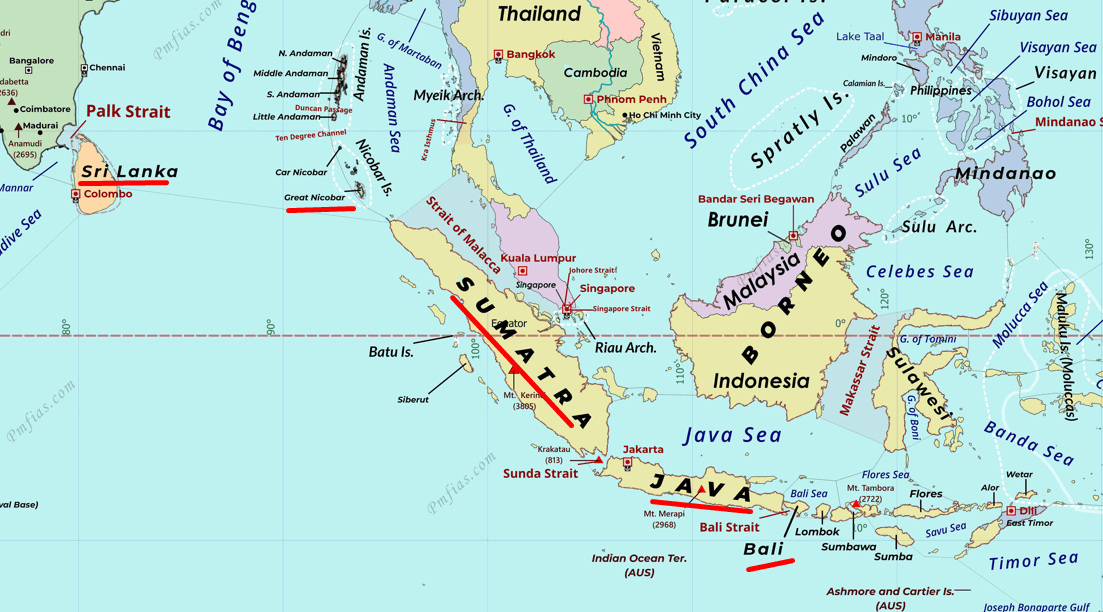
Which of the following is geographically closest to Great Nicobar?
- Sumatra
- Borneo
- Java
- Sri Lanka
Explanation
Option (a) is correct
- Great Nicobar to Sumatra distance: 1192 km approx.
- Great Nicobar to Borneo distance: 2,398 km approx.
- Great Nicobar to Java distance: 1817 km approx.
- Great Nicobar to Sri Lanka distance: 1437 km approx.

Answer: (a) Sumatra; Difficulty Level: Easy
Out of the following statements, choose the one that brings out the principle underlying the Cabinet form of Government:
- An arrangement for minimizing the criticism against the Government whose responsibilities are complex and hard to carry out to the satisfaction of all.
- A mechanism for speeding up the activities of the Government whose responsibilities are increasing day by day.
- A mechanism of parliamentary democracy for ensuring collective responsibility of the Government to the people.
- A device for strengthening the hands of the head of the Government whose hold over the people is in a state of decline.
Explanation
Option (c) is correct
- The parliamentary government is also known as cabinet government or responsible government or Westminster model of government and is prevalent in Britain, Japan, Canada, India among others. A fundamental principle of this system is Collective Responsibility, wherein ministers are collectively accountable to Parliament, specifically the Lok Sabha (House of People), according to Article 75.
- It ensures that the executive is collectively responsible to the legislature and, through it, to the people.
- The principle also implies that the Lok Sabha can remove the ministry (i.e., council of ministers headed by the prime minister) from office by passing a vote of no confidence.
Answer: (c) A mechanism of parliamentary democracy for ensuring collective responsibility of the Government to the people; Difficulty Level: Easy
Which one of the following is not a feature of Indian federalism?
- There is an independent judiciary in India.
- Powers have been clearly divided between the Centre and the States.
- The federating units have been given unequal representation in the Rajya Sabha.
- It is the result of an agreement among the federating units.
Explanation
Option (d) is not a feature
- The term ‘federation’ has nowhere been used in the Constitution. Instead, Article 1 of the Constitution describes India as A ‘Union of States. According to Dr B.R. Ambedkar, the phrase ‘Union of States’ has been preferred to ‘Federation of States’ to indicate two things:
- the Indian federation is not the result of an agreement among the states like the American Federation; and
- the states have no right to secede from the federation.
Option (a) is a feature
- The Constitution establishes an independent judiciary headed by the Supreme Court for two purposes: one, to protect the supremacy of the Constitution by exercising the power of judicial review; and two, to settle the disputes between the Centre and the states or between the states.
Option (b) is a feature
- The Constitution establishes a dual polity consisting of the Union at the Centre and the states at the periphery. Each is endowed with sovereign powers to be exercised in the field assigned to them respectively by the Constitution.
- The Constitution divided the powers between the Centre and the states in terms of the Union List, State List and Concurrent List in the Seventh Schedule.
Option (c) is a feature
- In Indian federalism, the federating units are not equally represented in the Rajya Sabha. State representation in the Upper House of Parliament (Rajya Sabha) is based on the population of each state, leading to unequal distribution of seats among the states.