★ 🆕 Agriculture 1st Edition ⚡️ Order Now! ★                      ★ 🆕 Environment 4th Edition ⚡️ Order Now! ★                      ★ Download Prelims Magnum 2026 — Yearly [FREE] ★                      ★ Prelims Cracker 2026 Combo Deal ⚡️ Magnum Crash Course + Test Series ★                      ★ PMF IAS Impact 🎯 53 Direct Hits in Prelims 2025 ★

Current Affairs – May 23-24, 2025

Prelims Cracker
PMF IAS Foundation Course (History) ()

{GS2 – Social Sector – Health} Global Obesity Crisis and Cardiovascular Risk **

  • Context (LM): The World Heart Federation’s (WHF) 2025 report highlights the alarming rise in global obesity and its growing impact on cardiovascular health, with critical gaps in treatment and access.
  • Obesity is an abnormal or excessive fat accumulation that increases health risks. It is measured using a standard metric, BMI (Body Mass Index); a BMI ≥25 is overweight, ≥30 is obese.
  • Formula: BMI = weight (kg) ÷ height² (m²).

WHF 2025 Report Highlights

  • Global Obesity Surge: Adult obesity has quadrupled since 1990, rising to 878 million by 2022. If current trends continue, by 2050, nearly two-thirds of adults over 25 worldwide could be overweight or obese.
  • India’s Growing Obesity Burden: According to NFHS-5, 24% of Indian women and 23% of men are obese. This translates to 44 million obese women (10%) and 26 million obese men (5%), showing a disproportionately higher burden on women.
  • Rising Childhood Obesity: Obesity among Indian children & adolescents (5-19 years) has increased, 5.2 million girls (3%) & 7.3 million boys (4%) are obese, both showing ~3% rise since 1990.
  • Higher Cardiovascular Risk in Youth: Children with high BMI are 40% more likely to suffer from cardiovascular disease (CVD) in midlife, highlighting long-term health risks of early obesity onset.
  • Obesity-CVD Link in India: Cardiovascular diseases account for 25% of all deaths in India. Of these, 5.6% are attributable to high BMI, up from 2.44% in 1990. Gender-wise, 7% of CVD deaths in women and 4.6% in men are linked to obesity.
  • Skyrocketing Economic Impact: India’s obesity-related economic burden was 1% of GDP in 2019, projected to increase to 2.5% of GDP by 2060, a 29-fold rise.
  • Gaps in Obesity Management: Lack of access to structured obesity care; Treatment remains fragmented, often limited to short-term lifestyle changes that are unsustainable for chronic obesity.
  • Stigma and Misinformation: Social stigma, public misunderstanding and lack of recognition of obesity as a chronic disease prevent timely and effective interventions.
  • Limited Access to Pharmacological Solutions: The GLP-1 drug Mounjaro is costly and unaffordable for most patients despite rising sales.
    • GLP-1 Drug Mechanism: These drugs mimic a hormone that regulates blood sugar and appetite and are effective in managing both type-2 diabetes and obesity.

Key Recommendations by WHF

  • Policy interventions: Tax sugary drinks, subsidize healthy foods, regulate marketing of junk food.
  • Expand treatment access: Affordable obesity medications like GLP-1RAs should be scaled.
  • Clinical guidance: CVD guidelines must integrate obesity-specific protocols.
  • Preventive Public Health Measures: Focused on awareness, early detection and risk mitigation strategies. Address commercial pressures promoting ultra-processed foods and close care delivery gaps.
  • Call For Comprehensive Public Health Response: Governments must treat obesity as multifactorial and chronic, not merely lifestyle-based.
  • Systemic Reforms: Equitable access to diagnostics, treatment & long-term support must be ensured.

Also refer to Obesity in India.

{GS3 – Agri – Food Security} Global Hunger Crisis 2025

  • Context (ET): The Global Report on Food Crises (GRFC) 2025, released by the Global Network Against Food Crises (GNAFC), highlights a worsening global hunger situation in 2024.

Global Hunger

Credit: GRFC 2025 report

  • The Global Network Against Food Crises (GNAFC) is a multi-stakeholder partnership launched in 2016, led by the United Nations and other international organizations, to coordinate global efforts in tackling acute food insecurity and malnutrition.

Key Highlights of the Global Report on Food Crises (GRFC) 2025

  • 295.3 mn people in 53 countries faced acute food insecurity, up by 13.7 million from 2023.
  • 1.9 million people faced Catastrophe — the highest since reporting began in 2016.
  • 38 mn children under five suffered from acute malnutrition (wasting), facing severe developmental and mortality risks.
  • 60% of the chronically hungry are women and girls due to gender-based inequalities.
  • 75% of displaced populations (about 95.8 million people) lived in countries experiencing a food crisis.
  • Smallholder farmers suffer from hunger due to climate shocks and market failures.
  • Humanitarian funding is projected to drop by up to 45% in 2025, risking disruption for 14 million children.
  • For the first time, the GRFC reports on ‘nutrition crises’ and ‘nutrition concerns’ in food crisis countries:
    • Of 53 countries, 26 had a “nutrition crisis” and 4 had “nutrition concerns”. Sudan, Gaza, Yemen, and Mali were the worst affected.

Understanding Acute Food Insecurity and Nutrition Crisis

  • Acute food insecurity means people lack reliable access to sufficient and nutritious food, threatening their lives or livelihoods.
  • Severity is measured using the Integrated Food Security Phase Classification (IPC):
    • Phase 1: Minimal; Phase 2: Stressed; Phase 3: Crisis; Phase 4: Emergency; and Phase 5: Catastrophe/Famine
  • A nutrition crisis arises when acute malnutrition spikes due to food shortages, disease, conflict, and weak health systems, particularly endangering children aged 6–59 months.
  • Nutrition Concern is a warning stage where malnutrition rates are rising or remain high but have not yet reached the critical levels of a crisis.

Key Drivers of the Crisis

Global Hunger

Credit: GRFC 2025 report

  • Conflict and displacement: Primary driver in 20 countries, affecting 139.8 million people.
    • Most IPC Phase 5 (Catastrophe) cases occurred in Sudan, Nigeria, and Myanmar.
    • Famine was officially confirmed in Zamzam camp, North Darfur, Sudan (July 2024), the first since 2020.
    • Gaza and Sudan reported the worst acute malnutrition levels. Global acute malnutrition cases in the top 10 countries rose from 26.9 million (2023) to 30.4 million (2024).
  • Climate extremes: El Niño, floods, and droughts disrupted food production in 18 countries, impacting 96.1 million people.
    • In 2024, 95.8 million displaced people lived in food crisis countries — 75% were internally displaced.
  • Economic shocks: Affected 59.4 million people in 15 countries (e.g., South Sudan).
    • Inflation, currency devaluation, disrupted supply chains reduced access to affordable, nutritious food.
  • Humanitarian Funding cuts: Abrupt United States Agency for International Development (USAID) withdrawal in 2025 severely impacted programs in Afghanistan, DRC, Ethiopia, Haiti, risking deaths due to a lack of food and health services.
  • Governance and data gaps: Fragile institutions, political instability, poor health infrastructure, and lack of quality data limit effective response and increase long-term vulnerability.

{GS3 – Envi – Conservation} India’s ‘Five-point call for Global Action’

  • Context (PIB|TKP): India presented its ‘Five-Point Call for Global Action’ at the first Sagarmatha Sambaad in Kathmandu, Nepal. The summit is named after Mt. Everest.
  • Theme: “Climate Change, Mountains, and the Future of Humanity.”

India’s Five-Point Global Call for Mountain Action

  • Enhanced Scientific Cooperation: Promote joint research on cryosphere dynamics, hydrology, and biodiversity. Enable real-time data sharing for climate and ecological monitoring.
  • Building Climate Resilience: Invest in early warning systems, especially for GLOFs, and develop climate-resilient infrastructure in vulnerable mountain regions.
  • Empowering Mountain Communities: Prioritise local communities’ welfare and aspirations in policymaking. Encourage green livelihoods, sustainable tourism, and recognise traditional knowledge as a vital conservation resource.
  • Providing Green Finance: Ensure predictable and adequate climate finance in line with UNFCCC and Paris Agreement commitments to support mountain nations’ adaptation and mitigation efforts.
  • Recognising Mountain Perspectives: Advocate for including mountain-specific vulnerabilities and contributions in global climate frameworks like UNFCCC COP and Sustainable Development Goals (SDGs).

Why are the Himalayas Vulnerable?

  • Glacial Retreat & Glacial Lake Outburst Floods (GLOFs): Rising temperatures accelerate glacier melt, creating unstable glacial lakes prone to catastrophic Glacial Lake Outburst Floods (GLOFs), threatening downstream communities and infrastructure.
  • Biodiversity Threats: Climate change and habitat fragmentation endanger endemic species like snow leopards and red pandas, disrupting fragile ecosystems.
  • Disaster Risk: The fragile Himalayan terrain is susceptible to frequent landslides, floods, and extreme weather events, exacerbated by climate change.
  • Climate Injustice: South Asia contributes only about 4% of historical global carbon emissions, but disproportionately suffers climate impacts.
  • Neglect in Global Policy: Mountain ecosystems’ unique vulnerabilities are underrepresented in international climate negotiations and finance mechanisms, limiting effective global action.

India’s Initiatives to Protect the Himalayas

  • Project Snow Leopard: Conducted India’s first national snow leopard census (2019–2023), recording 718 leopards (10–15% of the global population), focusing on species and habitat conservation.
  • International Big Cats Alliance: Promotes regional cooperation for conserving snow leopards, tigers, and leopards through shared expertise and joint projects.
  • National Mission on Sustaining Himalayan Ecosystem (NMSHE): Part of India’s National Action Plan on Climate Change (NAPCC) to address climate impacts on the fragile Himalayan ecology.
  • Securing Conservation and Sustainable Use of High Range Himalayan Ecosystems (SECURE) Himalaya Project: Global Environment Facility (GEF) backed initiative integrating biodiversity conservation with sustainable community livelihoods.
  • Collaboration with ICIMOD: Engages with this regional centre for research, climate adaptation, and disaster risk reduction in the Hindu Kush Himalayas.

ICIMOD (International Centre for Integrated Mountain Development)

  • Founded in 1983 and based in Kathmandu, Nepal.
  • Regional intergovernmental body serving eight Hindu Kush Himalaya countries.
  • Promotes sustainable mountain development through research, knowledge sharing & capacity building. Key areas are climate adaptation, disaster risk reduction, conservation, and improving livelihoods.

Also Read > Protecting the Himalayas, UNEP or UN Environment.

{GS3 – Envi – Laws} SC Strikes Down Retrospective Environmental Clearances

EIA and Prior Clearance Mandate

  • EIA is a multi-stage process involving project screening, impact studies, public hearings, and expert appraisal committee recommendations before approval.
  • Projects are categorized into:
    • Category A: Central government appraisal via Expert Appraisal Committee (EAC).
    • Category B: State/UT level appraisal via State Expert Appraisal Committee (SEAC).
  • The 2006 EIA Notification mandates prior environmental clearance for projects likely to impact environment, human health, and social infrastructure.
    • Prior EC is crucial to uphold the precautionary principle and ensure sustainable development.
  • Government’s 2017 Notification: Allowed post-facto EC applications within a limited six-month window for projects that began or expanded operations without prior clearance.
    • Rationale: To bring violations under regulatory control and enforce remediation fees, removing economic advantage from illegal actions.

Key Highlights of the Supreme Court Verdict

  • Retrospective or ex-post facto environmental clearances for projects started without prior EC are illegal and unconstitutional.
  • Struck down the 2017 notification and invalidated the 2021 Office Memorandum (OM) that institutionalized procedures for granting retrospective clearances.
  • Declared that no future notifications or OMs allowing retrospective clearances be issued, reinforcing the primacy of prior EC mandated by the 2006 EIA Notification.
  • The notifications violated Articles 14 (Equality before law) & 21 (Right to life and healthy environment).
  • Article 21 guarantees right to life inclusive of a healthy environment; retrospective clearances undermine this right.
    • Right to Clean Environment reaffirmed in:
      • TN Godavarman Thirumulpad v Union of India (1997): Need for EIA before forest projects.
      • MC Mehta v Union of India (1996): EIAs necessary for projects affecting water bodies.
      • Centre for Environmental Law v Union of India (2018): Emphasized EIA process & public consultations.
  • Article 14 violation noted as retrospective clearances granted preferential treatment to violators, breaching equality before law.
  • Referred to precedents:
    • Common Cause v. Union of India (2017): Ex-post facto EC alien to environmental jurisprudence.
    • Alembic Pharmaceuticals v. Rohit Prajapati (2020): Retrospective approvals derogate fundamental environmental principles and EIA objectives.
  • Court condemned Centre’s attempts to circumvent prior judgments via “crafty drafting” of SOP avoiding the term ex-post facto but with identical effect.
  • The Court emphasized: “Conservation of environment and its improvement is an essential part of the concept of development,” and development cannot come at environment’s cost.
  • Affirmed that protecting violators contradicts constitutional duty to protect environment under Environment (Protection) Act, 1986.

Government Initiatives for Environmental Governance

  • ENVIS (Environmental Information System): Since 1982, collects and disseminates environmental data to aid decision-making.
  • PARIVESH: Single-window online platform for streamlined environmental clearances and compliance monitoring, enhancing transparency and efficiency.

{GS3 – S&T – AI} Take it Down Act of US

  • Context (ET): The U.S. passed the Take It Down Act to address the alarming rise of non-consensual intimate imagery and deepfakes, mandating swift content removal by online platforms.

Take It Down Act of the US

  • Criminalizes Non-Consensual Sharing: Makes it illegal to publish or threaten to publish intimate images, including AI-generated deepfakes, without consent.
  • Mandatory Takedown Timeline: Requires websites and platforms to remove such content within 48 hours of victim notification and delete duplicates.
  • Victim Empowerment: Grants victims the legal right to take action against perpetrators for both real and AI-generated content.
  • Flawed Implementation Mechanisms: Relies on automated filters prone to errors and imposes tight deadlines that may lead to over-removal of lawful speech.
  • Risk of Over-Censorship: Critics warn the Act’s broad scope may censor legitimate content like protest images or LGBTQ+ content.

Deepfakes

  • They are synthetic media created using AI, especially deep learning & Generative Adversarial Networks (GANs), to imitate real individuals’ faces/voices/actions. It is hyper-realistic digital falsification.
  • The term “deepfake” was coined in 2017 when an anonymous Reddit user used Google’s open-source deep-learning technology to create explicit videos and used the pseudonym “Deepfakes”.

Key Threats

  • Misinformation and Propaganda: Spread fake political videos or statements to manipulate public opinion, disrupt elections, incite unrest, and destabilize democracies.
  • Financial Frauds and Scams: Impersonate executives to deceive organizations, enabling large-scale frauds, personal financial loss, and potential economic destabilization.
  • Non-Consensual Pornographic Content: Create sexually explicit media using someone’s likeness, especially targeting women and minors, causing trauma, defamation, and reputational harm.
  • Erosion of Public Trust: Undermines faith in authentic news and media, fostering factual relativism and liar’s dividend, where truths are dismissed as fake.
  • Psychological and Social Harm: Triggers mental distress, harassment, and online hostility—particularly for women and vulnerable individuals.
  • Privacy Violations and Identity Theft: Deepfakes infringe on privacy, enabling misuse of personal identity to defame or deceive.
  • National and International Security Risks: May provoke tensions between communities or nations through fabricated events, eg- Gabon President deepfake sparking coup fears.
  • Technological Detection Challenges: Rapid advancements in AI make it difficult to reliably detect or trace deepfakes, outpacing regulatory and security efforts.
  • Regulatory Gaps: Lack of deepfake-specific laws and weak penalties in many countries hinder effective legal action against perpetrators.
  • Factual relativism: The belief that facts & truth are subjective & dependent on one’s perspective/context.
  • Liar’s dividend: An undesirable truth is dismissed as a deepfake or fake news.

How to Spot Deepfakes

  • Facial anomalies like unnatural blinking or expressions.
  • Jerky movements or awkward head turns.
  • Blurring or distortions during fast motion scenes.

Regulation for Deepfake Technology in India

  • No dedicated law defining or addressing deepfakes directly. However, specific laws can be addressed for misusing the tech, which includes copyright violation, defamation, and cyber crimes.
  • Key Challenges
    • Punishments under existing laws may not deter large-scale AI-driven crimes.
    • Enforcement challenges due to jurisdictional issues and technical complexity.

Specific Laws in India to Address Misuse of Deepfake Technology

Section 500 of the IPC Punishment for defamation.
Information Technology Act, 2000 Sections 66D: Punishment for online impersonation and digital cheating.

Section 66E: Penalises violation of privacy.

Sections 67, 67A and 67B: Punishment for obscene or sexually explicit material.

IT Rules, 2021 Social media firms must remove artificially morphed content within 36 hours of receiving an alert.
Representation of the People Act, 1951 Prohibits the creation and dissemination of false information about candidates or political parties during an election period.
Digital Personal Data Protection Act, 2023 Addresses unauthorized use of personal data.
Bharatiya Nyaya Sanhita, 2023 (BNS) Section 356: Defamation.

Section 111: Organised digital crime.

Sections 316, 318: Digital theft and cheating.

Indecent Representation of Women Act, 1986 Prohibits indecent portrayal of women.

Institutional and Platform-Level Measures

  • Online Reporting Support: Platforms are being encouraged to assist users in filing FIRs for deepfake-related crimes.
  • Platform Accountability: Under Section 66D of the IT Act, platforms risk losing legal protection if they fail to act promptly on takedown requests.

{GS3 – S&T – Bio} System of Naming Species *

  • Context (TH): Recently, the system of naming species was in news.

Scientific Naming of Species

  • It was introduced by Carl Linnaeus, a Swedish botanist, in the 18th century.
    • His book Systema Naturae laid the foundation for a universally accepted method in taxonomy.
  • He is considered the founder of modern taxonomy and was the 1st to use binomial nomenclature.

Binomial Nomenclature

  • A species (animal or plant) is designated by two parts, with the 1st identifying the genus to which it belongs and the 2nd the species.
    • Genus: The 1st word indicates the genus and is always capitalized.
    • Species: The 2nd word is the specific epithet and is not capitalized.
  • The full name is italicized when typed (or underlined when handwritten). Example: Homo sapiens – Human, Panthera tigris – Tiger etc.

Rules and Governance

  • International Commission on Zoological Nomenclature (ICZN): Regulates the zoological nomenclature or the naming of animals.
  • International Association of Plant Taxonomy (IAPT): Controls the scientific naming of plant diversity such as algae, fungi, and plants.
  • They ensure that:
    • No two species have the same name;
    • Each name is unique, stable, and descriptive;
    • Names are published and peer-reviewed before acceptance.

How Are Species Actually Named?

  • While many species are named based on their physical traits or habitats, others have more unexpected inspirations ranging from celebrities & fictional characters to geographical locations and quirky wordplay.
Species Named After Celebrities
  • Nannaria swiftae: A North American millipede named after Taylor Swift.
  • Heterospilus washingtoni: A parasitic wasp named after George Washington.
  • Sericomyrmex radioheadi: An ant named after the band Radiohead for their environmental activism.
  • Batillipes kalami: Named after A.P.J. Abdul Kalam.
Named After Projects and Missions
Named After Places
  • Gekko mizoramensis: A gecko named after Mizoram.
  • Pinanga subterranean: A palm named for its underground flowering habit.
  • Stygarctus keralensis: A species of marine tardigrade named after the state of Kerala.
Fictional and Mythological Inspirations
  • Dracorex hogwartsia: A dinosaur named after Hogwarts from the Harry Potter series.
  • Gollumjapyx smeagol & Macrostyphlus Gandalf: Named after characters from J.R.R. Tolkien’s novels.
  • Cthulhu macrofasciculumque: Inspired by H.P. Lovecraft’s mythical creature.
Quirky and Humorous Names
  • Gelae donut, Gelae fish: Playful names for fungus beetles.
  • Orizabus subaziro: A palindromic name.
  • Erythroneura ix: A simple name marking the 9th species in a series.

Controversy in Naming

  • The cave beetle Anophthalmus hitleri, named after Adolf Hitler, has sparked criticism and calls for renaming due to its offensive association.
  • This shows that while naming can be creative, it also comes with ethical responsibilities.

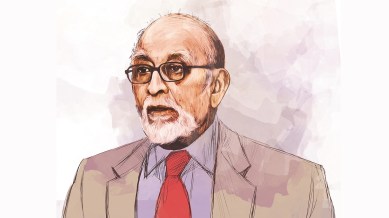
{Prelims – PIN} Dr. M.R. Srinivasan

M.R. Srinivasan

Source: IE

Srinivasan’s Contributions

  • Joined DAE in 1955 and collaborated with Dr. Homi Bhabha on Apsara, Asia’s first nuclear research reactor, commissioned in 1956.
  • Led the transition from research to commercial nuclear power, playing a pivotal role in setting up India’s first atomic power station, Tarapur-1.
  • Founder-Chairman of the Nuclear Power Corporation of India Limited (NPCIL) and oversaw the development of 18 nuclear power units under NPCIL, strengthening India’s nuclear power infrastructure.
  • Headed project planning, design and execution of major nuclear power stations including Madras Atomic Power Station and other strategic installations.
  • Pushed self-reliance in reactor tech, advancing indigenous capability in reactor design & implementation.
  • Promoted India’s three-stage nuclear programme, emphasising thorium utilisation for long-term energy security.
  • Served on Planning Commission (1996–98) and National Security Advisory Board, contributing to nuclear energy policy and national security frameworks.
  • Received Padma Shri, Padma Bhushan and Padma Vibhushan in recognition of his lifelong contributions to atomic energy.
  • Supported global cooperation through nuclear agreements with Russia, France and the U.S., and backed new-age initiatives like Bharat Small Modular Reactors (BSMRs) for clean energy expansion.

India’s Nuclear Energy Programme

  • A strategic initiative launched post-Independence to ensure energy independence and clean energy access through indigenous technology.

india nuclear programme

Three-Stage Programme Structure

  1. Stage I: Pressurized Heavy Water Reactors (PHWRs) using natural uranium.
  2. Stage II: Fast Breeder Reactors (FBRs) to generate plutonium as secondary fuel.
  3. Stage III: Advanced Thorium Reactors leveraging India’s 21% share of global thorium reserves.

Current Status and Future Roadmap

  • As of 2024, 23 operational reactors across 7 sites with 8,180 MW capacity (up from 4,780 MW in 2014).
  • Target: 22,480 MW by 2031–32.
  • Prototype Fast Breeder Reactor (PFBR) core-loaded at Kalpakkam, signaling entry into Stage II.

Institutional and Infrastructure Growth

  • Atomic Energy Commission (AEC) founded in 1948 under Dr. Homi Bhabha.
  • Establishment of NPCIL to execute commercial nuclear power projects.
  • India’s indigenous nuclear infrastructure has expanded under guidance of scientists like Dr. Srinivasan.

Never Miss an Update!

Leave a Reply

Your email address will not be published. Required fields are marked *