- The One Health approach links human, animal, and environmental health for coordinated disease prevention. In India, the ₹383 crore National One Health Mission strengthens surveillance and response to zoonotic diseases.
What is the ‘One Health’ Approach?
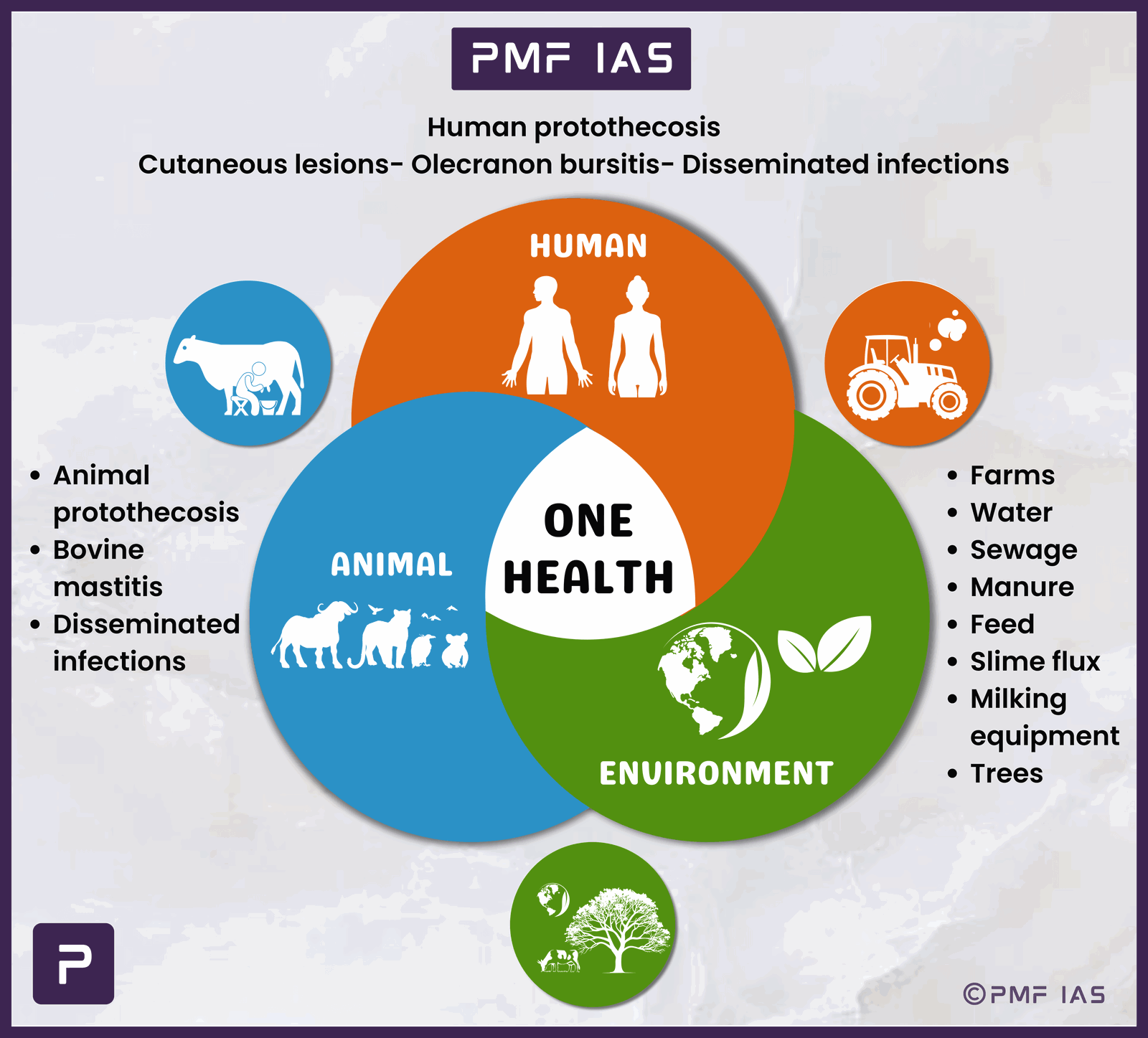
- It is a collaborative framework linking human, animal, & environmental health to tackle shared risks.
- Interdisciplinary Scope: Medical, veterinary, and ecological sciences converge to guide interventions.
- Global Standing: WHO, FAO, UNEP, & WOAH formally endorse the framework for zoonotic governance.
- Policy Anchor: India’s National One Health Mission provides institutionalised multisectoral coordination.
- Mass Immunisation: Large-scale animal vaccination interrupts critical zoonotic transmission chains.
- Livestock Monitoring: Continuous veterinary surveillance enables hotspot detection & early response.
- Drug Oversight: Regulating veterinary pharmaceuticals prevents resistance & ecological disruptions.
- Waste Control: Hygienic carcass and garbage management lowers disease-vector proliferation.
- Integrated Databases: Linking human, veterinary, and ecological data strengthens zoonotic surveillance.
Why is the One Health Approach Important?
- Increase in Zoonotic Diseases: E.g., Nipah, COVID-19 etc. 60% of pathogens that cause human diseases originate from domestic animals or wildlife.
- 75% of emerging infectious human diseases have an animal origin.
- 80% of pathogens that are of bioterrorism concern originate in animals.
- Threat to Food Security: More than 20% of global animal production loss is due to animal diseases.
- Environmental Degradation: Human actions have severely altered 75% of terrestrial environments and 66% of marine environments.
- Humans and their livestock are more likely to encounter wildlife due to these disruptions.
- Some of these contacts may increase the likelihood of disease transmission.
- Increase in Pollution: The environment deteriorated by pollution affects human and animal health.
- Increase in Trade and Tourism: Due to the increase in human movements chances of transmission of diseases have increased.
- Threat of Antimicrobial Resistance (AMR): It is the ability of microorganisms to resist the effects of antimicrobial drugs, such as antibiotics.
- Climate Change: Climate change has contributed to the increase of pathogens and disease vectors.
One Health Joint Plan of Action
- OH JPA was launched by FAO, UNEP, WHO, & the World Organisation for Animal Health (WOAH).
- It is a 5-year plan launched in 2022.
- It aims to create a framework to strengthen collaboration, communication, capacity building, and coordination across all sectors responsible for addressing health concerns at the human-animal-plant-environment interface.
|
Structural Challenges in Implementation
- Fragmented Agencies: Health, veterinary & municipal systems work in silos without coordination.
- Infrastructure Deficit: Weak diagnostic labs restrict timely zoonotic disease confirmation & treatment.
- Funding Imbalance: Animal health services attract far less investment than human health.
- Community Barriers: Public resistance & misinformation obstruct animal vaccination and surveillance.
- Climate Stressors: Rising temperatures and erratic rainfall expand pathogen niches and vectors.
Way Forward
- Mission Deepening: Broaden India’s One Health Mission through stronger inter-ministerial leadership.
- Vaccination Expansion: Scale up immunisation campaigns targeting rabies and avian influenza.
- Laboratory Network: Establish district-level zoonotic labs with integrated diagnostic facilities.
- AMR Strategy: Operationalise India’s One Health AMR plan to regulate antimicrobial use.
- Digital Integration: Build national zoonotic surveillance platforms using AI and GIS tools.
The One Health approach integrates human, animal, and environmental health to tackle zoonotic threats holistically. India’s National One Health Mission strengthens preparedness through surveillance, vaccination, and AMR control, advancing SDG 2, 3, and 13 for a resilient and sustainable future.
Reference: Times of India
PMF IAS Pathfinder for Mains – Question 420
Q. The ‘One Health’ approach has emerged as a core pillar of global health security. To what extent can it enhance India’s capacity to prevent, detect, and respond to zoonotic diseases? Discuss its significance and the major challenges in operationalising it on the ground. (250 Words) (15 Marks)
Approach
- Introduction: Write a brief introduction about the One Health approach, and also mention the National One Health Mission.
- Body: Write how the ‘One Health’ Approach enhances India’s capacity, also mention significant challenges in operationalising it on the ground and suggest a way forward for it.
- Conclusion: Emphasis on a multi-pronged approach with cooperation and coordination.


