- Context (IE): Proposals to engage Pakistan for “Kartarpur Sahib” bring to the fore the idea of ‘Para-diplomacy’.
Paradiplomacy
- Paradiplomacy involves formal interactions between entities below the federal level — provincial and local governments — in pursuit of shared national goals.
- Paradiplomacy, conducted in tandem with the central government, can often produce openings that cannot be generated between the national governments’ congealed positions.
India’s complications in para diplomacy
- West Bengal had, in fact, complicated Delhi’s engagement with Dhaka.
- Similarly, Tamil Nadu governments have often exercised their veto over Delhi’s ties with Sri Lanka.
|
Paradiplomacy opportunities on the Pakistan border
- The state and Centre have to work for “exchange of territory” with Pakistan in return for Kartarpur Sahib.
- Reopening the Attari and Hussainiwala borders with Pakistan for trade and tourism.
- Special economic zone along the entire Punjab border seems to be a possible idea to work with.
Kartarpur Corridor
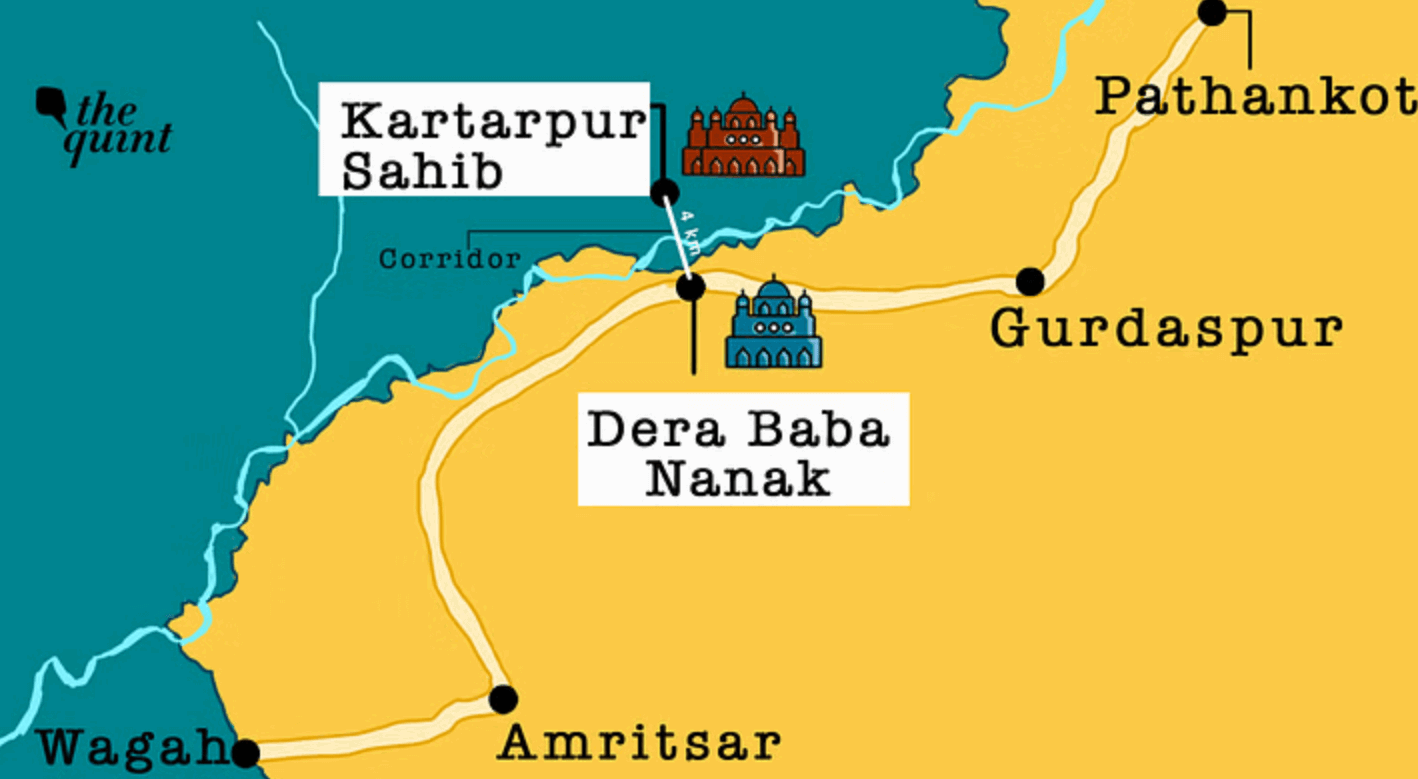
Credits: The Quint
- It connects the Darbar Sahib Gurdwara in Narowal (Pakistan) with the Dera Baba Nanak shrine in Gurdaspur (India’s Punjab).
- It was built to commemorate the 550th birth anniversary celebrations of Guru Nanak Dev.
- Village Kartarpur is located on the west bank of the River Ravi, where Guru Nanak Dev spent the last 18 years of his life.
|
Difficulties in para diplomacy with Pakistan
- Past baggage: It is hard to change the territorial status quo along the Radcliffe Line with a history of distrust and bloodshed.
- Pakistan Army’s resistance to economic cooperation: The Pakistan Army is not inclined to resume trade with India.
Refer to India-Pak trade to know more about halting of Indo-Pak trade.
Way forward
- India’s neighbourhood policy must work with the interests of the people in the border provinces.
- A consensus between the centre and the regional parties in the border provinces on developing a productive relationship with the neighbours is a must.


