- Context (TH): In a major policy reversal, the Ministry of Environment, Forest and Climate Change (MoEFCC) has exempted most coal-fired power plants from installing Flue Gas Desulphurisation (FGD) systems, previously mandated in 2015 to curb sulphur dioxide (SO₂).
About Flue Gas Desulphurisation (FGD)
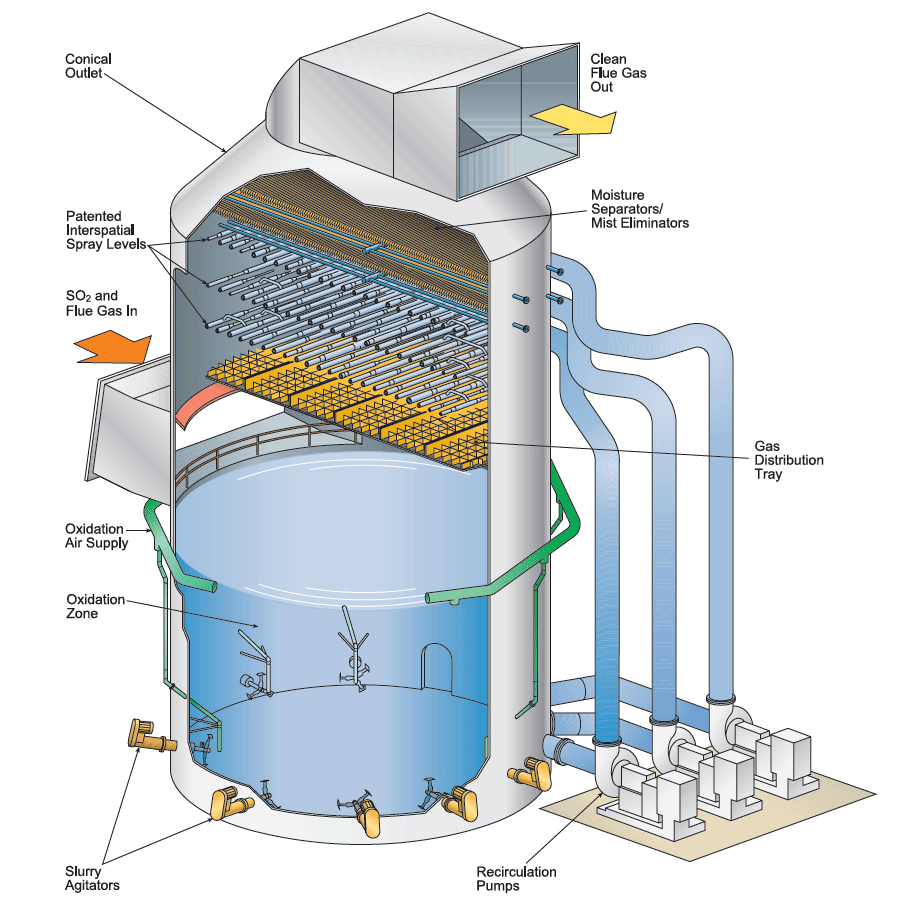
- FGD is a technology that removes sulphur dioxide (SO₂) from flue gas before its atmospheric release.
- The process involves passing flue gas through a scrubbing system, often using limestone or ammonia–based slurry, which converts SO₂ into gypsum or other neutral compounds.
- It utilises various methods to filter emissions, including wet scrubbing and dry methods.
- MoFECC guidelines require coal-based power plants to install flue-gas desulfurisation systems.
- Only 22 GW (~8%) of India’s coal-based capacity has installed FGD plants.
- Modern FGD systems can eliminate up to 95% of SO₂ emissions.
- FGD helps reduce acid rain, improves ambient air quality, and ensures compliance with the National Ambient Air Quality Standards (NAAQS) and the Air (Prevention and Control of Pollution) Act, 1981.

Credit: B&W
Why FGDs Matter?
- Flue Gas Desulphurisation (FGD) systems are used to remove sulphur dioxide (SO₂) from emissions of coal-based power plants.
- SO₂ emissions contribute to acid rain and PM2.5 pollution, both of which are harmful to human health and the environment.
- Despite the 2015 mandate, only about 8% of plants, mainly NTPC units, have installed FGDs.
- Implementation deadlines were repeatedly extended, with the latest missed in 2024.
What is Flue gas?
- Flue gas is the exhaust emitted from burning fossil fuels in thermal power plants & industrial processes.
- It contains a mixture of gases, including carbon dioxide (CO₂), carbon monoxide (CO), water vapour, nitrogen oxides (NOx), sulphur dioxide (SO₂), particulate matter (PM), and other trace pollutants.
- Its composition varies depending on the type of fuel and the combustion conditions.
- Released through chimneys or flues, the gas contains pollutants that require treatment before release.
Implications of Flue Gas
- Environmental: Contributes to air pollution, acid rain, smog formation, and climate change.
- Health: Exposure to particulate matter can lead to respiratory and cardiovascular diseases, particularly affecting lung health.
- Industrial/Economic: Pollutants accelerate equipment corrosion and increase maintenance costs; pollution control technologies such as FGDs add to operational expenses.
|
Key Highlights of the Decision
- The Ministry has now exempted around 80% of plants from the FGD requirement.
- Only about 20% of the plants must install FGDs, primarily:
- Those within a 10 km radius of Delhi-NCR
- In cities with over 1 million people, or
- Located in pollution hotspots
- The deadline for these selected plants to comply has been extended to 2028.
Rationale Cited by Government
- Cost & Supply Issues: Limited domestic FGD suppliers and high installation costs make procurement difficult and could lead to higher electricity tariffs, burdening producers and consumers.
- Post-COVID Delays: Implementation delays were also attributed to pandemic-related disruptions.
- Low-Sulphur Indian Coal: An expert committee claimed that domestic coal has low sulphur content, and SO₂ levels near most plants are within permissible limits.
- Climate Argument: Some officials argued that sulphates formed from SO₂ counteract global warming by reflecting sunlight, a claim that is scientifically questionable and controversial.
Concerns Associated
- Health Hazards Overlooked: SO₂ exposure is linked to respiratory ailments, while sulphates contribute to PM2.5 pollution and acid rain, posing serious public health and environmental risks.
- Non-Uniform Standards: The exemption introduces unequal environmental protections, violating the principle of equal safeguards for all citizens.
- Lack of Transparency: The rollback was done without adequate public or parliamentary scrutiny, undermining accountability and scientific integrity in policymaking.
- Misleading Climate Rationale: Justifying sulphate emissions as a climate mitigation tool contradicts the IPCC’s findings, which view their cooling effect as short-term and overall harmful.
Way Forward
- Uniform Standards: A pollutant like SO₂ should not be regulated differently across regions. Uniform air quality norms must be enforced nationwide.
- Technology Access: Encourage domestic manufacturing of low-cost FGDs through incentives and support under Make in India.
- Evidence-Based Policy: Any major shift in pollution control norms should undergo peer review and public consultations, ensuring evidence-based and participatory governance.
- Health-Centric Energy policy: Treat pollution control as a public health investment, not merely an environmental expense.
- Strengthen Monitoring: Enhance the capacity of the Central and State Pollution Control Boards to monitor SO₂ and sulphate levels and make data publicly accessible.
Also Read,> Air Quality Monitoring | Air Quality Index | NAAQS | SAFAR