- Context (UNICEF): UNICEF released the Child Nutrition Report 2024.
- UNICEF defines child food poverty as children’s inability to access and consume a nutritious and diverse diet in early childhood (i.e., the first five years of life).
- Child food poverty is distinct from other measures of child poverty and food poverty because it captures children’s direct experience of dietary deprivation.
How is child food poverty measured?
- It is measured using the UNICEF and WHO dietary diversity score.
- To meet the minimum dietary diversity for healthy growth and development, children need to consume foods from at least five out of the eight defined food groups.
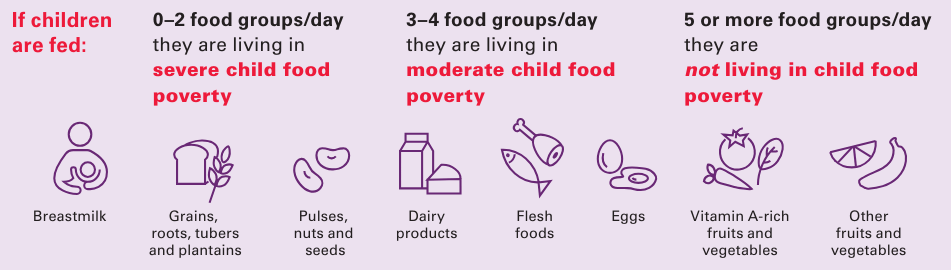
Credit: UNICEF
Findings of the report
- Globally, one in four children (27%) are living in severe child food poverty in early childhood, amounting to 181 million children under 5 years of age.
- South Asia and sub-Saharan Africa are home to more than two-thirds (68%) of the 181 million children living in severe child food poverty.
- Severe child food poverty is experienced by children belonging to poor and non-poor households, indicating that household income is not the only driver of child food poverty.
- Unhealthy foods are displacing more nutritious foods, becoming more entrenched in children’s diets.
- Drivers of child food poverty: Increasing inequities, economic crises, climatic shocks and conflict, poor food environments, poor feeding practices and household income poverty.
Recommendations
- Position child food poverty elimination as a policy imperative and child food poverty reduction as a metric of success towards achieving global and national nutrition and development goals.
- Transform food systems to make nutritious and healthy foods the most accessible, affordable and desirable option for feeding young children.
- Leverage health systems to deliver essential nutrition services to prevent and treat child malnutrition.
- Strengthen data systems to assess the prevalence and severity of child food poverty and identify its key drivers.
Also, learn about the ICMR’s Dietary Guidelines for Indians.


