1st Personalised Gene-Editing Therapy
- Context (IE): US doctors and researchers have successfully tested a gene-editing therapy to treat an infant diagnosed with a carbamoyl phosphate synthetase 1 (CPS-1) deficiency.
- Researchers developed a bespoke CRISPR-based therapy explicitly tailored for that infant.
- Unlike previous CRISPR treatments that require editing stem cells outside the body, this therapy was delivered directly into infants’ livers using lipid nanoparticles carrying RNA and a guide sequence targeting the mutation.
What is Gene Editing?
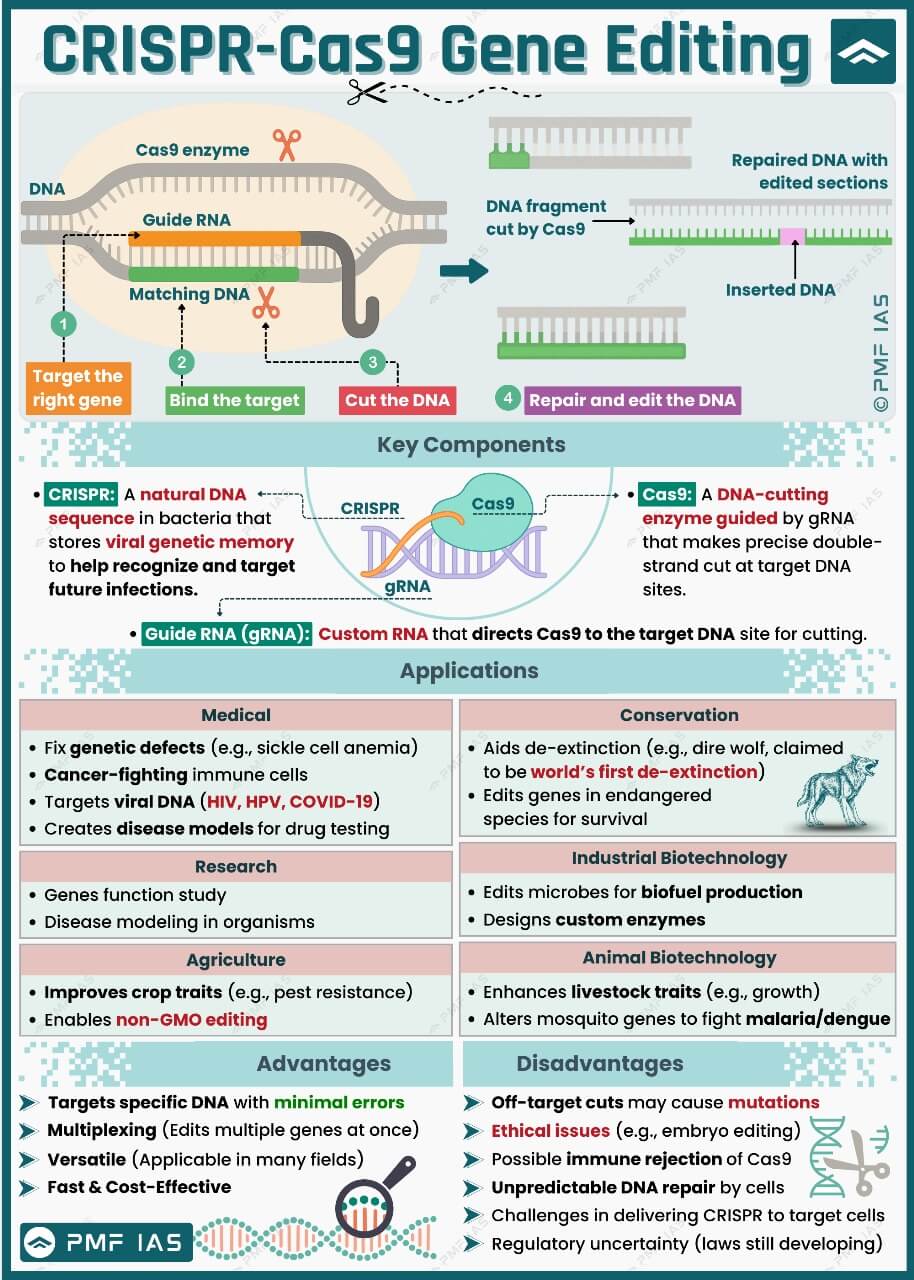
- Gene editing is a cutting-edge technique that allows scientists to make precise, targeted changes to the DNA of living organisms, including plants, bacteria, and animals.
- It enables adding, removing, or altering specific genetic material at particular locations in the genome.
- Tools: The most popular tool is CRISPR-Cas9, a system borrowed from bacteria that acts like molecular scissors to cut DNA at a specific spot.
- Other gene editing methods include TALENs and Zinc Finger Nucleases (ZFNs).

DNA Modification: Two Distinct Ways
|
Somatic Gene Editing |
Germline Gene Editing |
|
|
Applications
- Medical Treatments: Correcting genetic mutations to cure or manage diseases such as cystic fibrosis, sickle cell anaemia, muscular dystrophy, and certain cancers.
- Personalised Medicine: Designing therapies tailored to an individual’s genetic makeup for more effective results.
- Agriculture: Developing crops with improved yield, pest resistance, and climate resilience.
- Prevention of Genetic Disorders: Particularly via germline editing to stop hereditary diseases pre-birth.
Concerns Associated
- Safety Risks: Off-target mutations may cause unintended genetic changes, leading to harmful effects.
- Ethical Issues: Especially with germline editing, altering human heredity raises moral questions about consent, identity, and “designer babies”.
- Long-Term Impact: Unknown consequences on future generations and ecological balance.
- Access and Equity: Potential for widening social inequality if gene editing is only available to affluent populations.
Way Forward
- Strengthen Research and Development: Invest in improving the precision, efficiency, and safety of gene editing technologies like CRISPR, base editing, and prime editing.
- Establish Robust Regulatory Frameworks: Create clear, globally harmonised regulations that ensure ethical use, safety, and equitable access to gene editing therapies.
- Prioritise Ethical Considerations: Implement strict oversight to prevent unethical applications, such as ‘designer babies’ or genetic enhancements beyond therapeutic purposes.
- Focus on Accessibility and Equity: Ensure that breakthroughs in gene editing benefit all sections of society, especially marginalised and low-income groups.
About CPS-1 Deficiency
- It is a rare genetic metabolic disorder that affects the urea cycle, the body’s primary mechanism for removing excess nitrogen (ammonia) produced during protein metabolism.
- Urea Cycle: Normally, our body converts excess ammonia to urea and removes it from the body through urination. CPS-1 enzyme, located in the mitochondria of liver cells, catalyses the 1st step of the urea cycle.
- CPS-1 Deficiency leads to the inability to convert ammonia into urea, resulting in hyperammonemia (toxic ammonia buildup in the blood).