

Horseshoe Crabs
- Context (TH): Environmental groups have recently petitioned the U.S. government to grant endangered species protection for the American horseshoe crab.
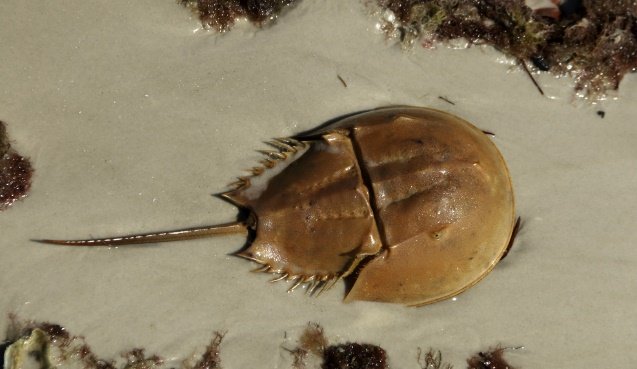
- Horseshoe crabs are marine chelicerate arthropods found in shallow coastal waters on soft, sandy, or muddy bottoms.
- They belong to the Subphylum Chelicerata, which includes animals like spiders, scorpions, harvestmen, mites, and ticks.
- Horseshoe crabs are marine arthropods, not true crabs, but are chelicerates, closely related to arachnids like spiders, ticks, and scorpions.
- Their segmented body, segmented limbs, and thick chitinous cuticle (exoskeleton) are typical features of arthropods.
- They predominantly spawn (release eggs) on intertidal beaches during summer-spring high tides.
- Horseshoe crabs are often regarded as “living fossils” due to their ancient lineage.
- Lifespan: 20 – 100 years.
- Conservation Status: IUCN Status: American horseshoe crab: Vulnerable, Tri-spine horseshoe crab: Endangered | WPA, 1972: Schedule IV
- Threats: Commercial harvest for biomedical use, habitat loss.
- The IUCN decided to observe the International Horseshoe Crab Day on 20th June.
Species and Distribution
- American horseshoe crab (Limulus polyphemus): Found along the eastern coast of the USA and in the Gulf of Mexico.
- Tri-spine horseshoe crab (Tachypleus tridentatus).
- Coastal horseshoe crab (Tachypleus gigas).
- Mangrove horseshoe crab (Carcinoscorpius rotundicauda)
- Odisha is their largest habitat in India.


