- Recently, rat-hole mining has come into focus following the deaths of miners in Assam’s Dima Hasao.
- In contrast, rat-hole miners played a crucial role in rescuing 41 trapped workers in the Silkyara-Barkot tunnel in Uttarkashi, in 2023, by manually digging through debris where conventional methods failed.
What is Rat-hole mining?
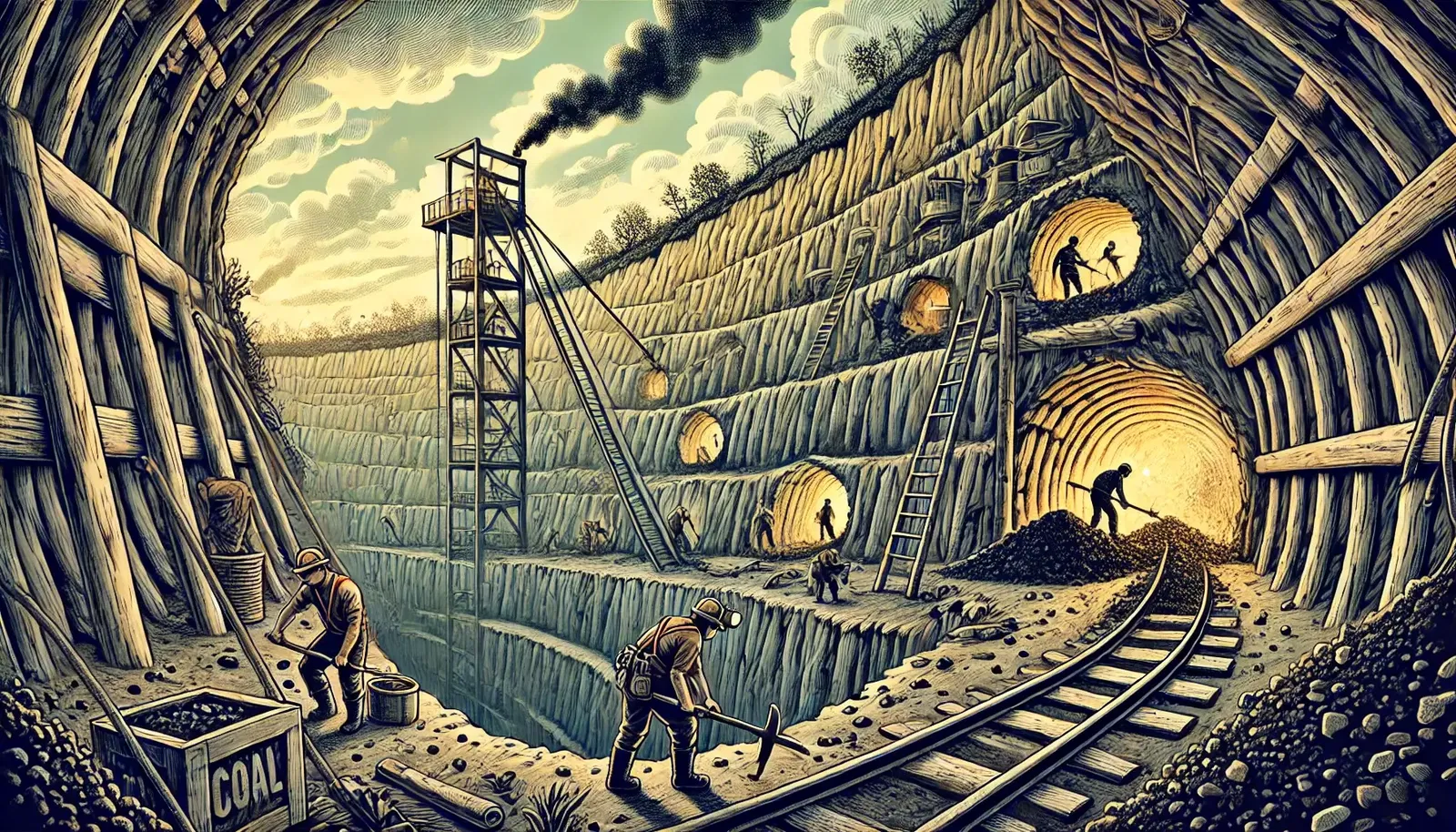
- The term “rat hole” refers to the narrow pits dug into the ground, typically just large enough for one person to descend and extract coal.
- Rat-hole mining is a manual drilling method, most common in Meghalaya to access thin coal seams.
- It comprises a deep vertical shaft with narrow horizontal tunnels, two to four feet in dimension, dug on its sides. Miners go into these horizontal tunnels for hundreds of feet to take out coal.
- Tools used: Primitive tools like pickaxes, shovels, and baskets are commonly used.
- Depth: Vertical pits can go as deep as 400 feet.
- After digging the pits, the miner drops into the holes using a rope and bamboo ladders.
- It is considered extremely hazardous.
- Despite being banned by the National Green Tribunal (NGT) in 2014 due to its varied hazardous impacts on human health, environment, and labor rights, rat-hole mining persists without much reduction in its size.
Why is rat-hole mining practised mainly in Meghalaya?
- Rat-hole mining is primarily practiced only in Meghalaya. Such cases are not witnessed in Jharkhand and Chhattisgarh because the coal seams are thick in Jharkhand and Chhattisgarh, while in Meghalaya, coal seams are very thin. So, economically it is not a good idea to do an open mining, and therefore, they prefer rat-hole mining.
|
Types of Rat-hole mining
- Side-Cutting: In it, narrow tunnels are dug on the hill slopes and workers go inside until they find the coal seam. The coal seam in the hills of Meghalaya is very thin, less than 2 m in most cases.
- Box-Cutting: In it, a rectangular opening is made, varying from 10 to 100 sqm, and through that a vertical pit is dug, 100 to 400 feet deep. Once the coal seam is found, rat-hole-sized tunnels are dug horizontally through which workers can extract the coal.
Hazards of Rat-Hole Mining
Environmental Hazards
- Water Pollution: The process leads to acid mine drainage (AMD), contaminating nearby rivers and streams with heavy metals like Iron, Cadmium, and Chromium, along with sulfates. This makes the water unfit for human and aquatic life. Several rivers in Meghalaya’s mining areas, including the Kopili River (Assam-Meghalaya), Myntdu, and Lukha Rivers (Jaintia Hills), have turned too acidic to sustain life.
- Deforestation & Soil Erosion: Extensive forest clearing for mining results in biodiversity loss, destruction of habitats, and topsoil erosion, making the land infertile.
- Air Pollution: Mining operations release fine particulate matter and toxic gases, degrading air quality and impacting the health of nearby communities. This is especially concerning as many rat-hole mining regions are home to Scheduled Tribes like the Jaintias, Khasis, and Garos.
Occupational Hazards
- Severe Health Risks: Workers, mostly children, suffer from silicosis and pneumoconiosis (black lung disease) due to prolonged exposure to coal dust. Poor ventilation increases the risk of asphyxiation and poisoning from toxic gases.
- Frequent Accidents & Fatalities: The unscientific and unsafe mining process, lacking proper support structures, leads to frequent cave-ins, flooding, and fatalities
Social and Human Rights Hazards
- Exploitation of Labor: Migrant workers, including children, are often forced to work in hazardous conditions without any social security, violating labor laws and fundamental human rights.
- Negligence of Health & Safety Standards: There is no adherence to safety norms, such as protective gear, helmets, or seasonal work restrictions, leading to a high rate of injuries and deaths among miners.
- Acid mine drainage is a process that occurs when water, oxygen, and sulfur-bearing minerals interact to produce sulfuric acid.
|
Reasons for Persistence Despite the Ban
Economic Factors
- Livelihood Dependency: A significant portion of the population in mining regions depends on rat-hole mining as their primary source of income. The high wages (around Rs. 2,500 per day) compared to agricultural work make it a lucrative option despite a multitude of risks attached with it.
- Demand for Coal: Local and regional industries rely on cheap coal sourced through rat-hole mining. The informal economy around coal extraction thrives due to weak enforcement in such areas.
Governance and Legal Challenges
- Weak Enforcement of Ban: As per Section 23C of the Mines and Minerals (Development and Regulation) Act, 1957, the State Governments are empowered to make rules for preventing illegal mining, transportation, and storage of minerals. Also, there is an NGT ban in place since 2014. However enforcement mechanisms remain inadequate due to a lack of manpower, corruption, vested interests, and political interference.
- Absence of Sustainable Alternatives: Governments have failed to provide alternative employment opportunities to the people involved in rat-hole mining, forcing them to return to mining for survival.
Socio-Cultural Factors
- Customary Land Rights: In Meghalaya, tribal communities have autonomous control over land and resources under the Sixth Schedule of the Constitution. It renders the regulatory intervention difficult.
- Resistance from Local Stakeholders: Local elites and coal gangs, who benefit tremendously from the mining economy, resist any move to change the status quo.
- Lack of Awareness: Poor awareness among workers about the health risks and the illegality of the mining contributes to its continuation without interruption.
Measures to Address the Issue
Strengthening Regulatory Framework
- Strict Enforcement of NGT Ban: The state governments should collaborate with central agencies to ensure that the NGT ban is strictly implemented, with regular monitoring and inspections.
- Introduction of Scientific Mining Practices: Encourage scientific and environmentally sustainable, as already advocated by the Supreme Court in 2019, mining practices to replace rat-hole mining.
Alternative Livelihood Programs
- Skill Development: Provide vocational training and skill development programs in arts and crafts to enable workers to transition to safer and more sustainable employment opportunities.
- Agriculture and Allied Activities: Promote sustainable agri-horticulture (like in Pineapple Cultivation), and eco-tourism as viable economic alternatives in mining regions. Meghalaya has a huge potential in these areas of the economy.
Community Awareness and Empowerment
- Awareness Campaigns: Conduct concerted awareness campaigns to educate local communities about the hazards of rat-hole mining and the benefits of sustainable development.
- Community Participation: Involve local communities in decision-making processes to ensure their buy-in and cooperation in implementing alternative solutions.
Environmental Restoration
- Rehabilitation of Mining Sites: Undertake reforestation and ecological restoration projects in abandoned mining areas.
- Water Management: Treat acid mine drainage (AMD) and ensure the availability of clean drinking water for affected communities.
Tackling Child Labor and Exploitation
- Strict Action Against Child Labor: Enforce stringent penalties on those employing child labour and ensure children are rehabilitated and provided education.
- Social Welfare Schemes: Implement welfare schemes, in health, education, standard of living, etc. targeted at improving the living conditions of mining families.
Leveraging Technology
- Use of Satellite Monitoring: Deploy satellite technology and GIS mapping to detect illegal mining activities in real time.
- Digital Governance: Create a centralised database for monitoring mining activities, their extent, and tracking offenders.
Role of Judiciary and Civil Society
- Judicial Oversight: Establish special committees and make all kinds of mining compliant with the Mines and Minerals (Development and Regulation) Act, 1957, and Mineral Concession Rules, 1960, and permission granted by the landowners.
- Role of NGOs: NGOs can play a crucial role in the advocacy, awareness, and rehabilitation efforts of the affected communities.
Disaster Management & Emergency Response
- Rapid Response Teams: Specialised rescue teams from the Indian Army, State Disaster Response Force (SDRF), and National Disaster Response Force (NDRF) must be deployed swiftly in case of mine collapses, floods, or gas leaks caused by explosions.
Way Forward
- Integrated Approach: A multi-stakeholder approach involving the government, civil society, and local communities, acting with utmost urgency, is essential to address the issue holistically.
- Sustainable Development: Efforts must be made to balance economic development with environmental conservation and social justice in the affected areas.
- Focus on Governance: Strengthening governance mechanisms and ensuring transparency and accountability in resource management are critical to curbing illegal activities like rat-hole mining.
Rat-hole mining is a grim reminder of the conflict between economic survival, social insecurity, and environmental destruction. Despite the legal ban, the practice continues unchecked due to poverty, lack of alternatives, and weak enforcement. Addressing its root causes through strong regulation, sustainable livelihoods, and community participation is the only way forward.
Reference: The Hindu
PMF IAS Pathfinder for Mains – Question 68
Q. Analyze the hazards of rat-hole mining and propose effective measures to mitigate its impact. (250 Words) (15 Marks)
Approach
- Introduction: Define Rat-Hole Mining briefly and mention its geographical prevalence in India (e.g., Meghalaya, Assam, etc.).
- Body: Elaborate on the hazards of Rat-Hole Mining, the reasons for its persistence, and the measures needed to address the issue.
- Conclusion: End with an emphasis on the need for a multi-stakeholder approach involving government, communities, and civil society.


