NEW Prelims Cracker 2027 ⚡️ Starts July 1st 📞 Call Now: 9211591415 ★                      ★ NEW GS Foundation 2027 ⚡️ Just Started ⬇️ Download Brochure 📞 Call Now: 9211591415 ★                      ★ PMF IAS Impact 🎯 53 Direct Hits in Prelims 2025 and 🎯 46 Direct Hits in Prelims 2026 ★

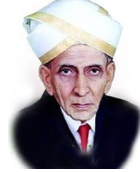
Sir M. Visvesvaraya

  • National Engineers’ Day is celebrated every year on September 15 to honor the birth anniversary of Sir Mokshagundam Visvesvaraya.
  • UNESCO-recognised World Engineering Day for Sustainable Development is celebrated globally on March 4 each year.

About M. Visvesvaraya

  • M. Visvesvaraya was a renowned civil engineer, statesman, and scholar who made significant contributions to the development of India in the fields of engineering, irrigation, education, and planning.

Sir M Visvesvaraya | Catalyst IAS

Credits: KGI

  • He was born on September 15, 1861, in Muddenahalli, Karnataka, and studied at the University of Madras and Pune’s College of Science.
  • He served as the 19th Diwan of Mysore, serving from 1912 to 1918, and the President of the All-India Manufacturers’ Organisation.
  • He was knighted as Knight Commander of the British Indian Empire (KCIE) by King George V in 1915 for his contribution to the public good.
  • He was awarded the Bharat Ratna, India’s highest civilian honour, in 1955.
  • He died on April 14, 1962, at the age of 100.

Contributions

  • He designed reservoirs like Osman Sagar and Himayat Sagar and proposed systematic flood control solutions. He also protected Visakhapatnam port from sea erosion, enhancing urban resilience.
  • He built the Krishnaraja Sagar Dam (Mysuru) in 1932, creating Asia’s largest reservoir and boosting agriculture.
  • He is credited with designing and patenting the automatic sluice gates, which were first installed at the Khadakwasla reservoir in Pune in 1903.
  • He introduced the block system of irrigation for equitable water distribution among farmers.
  • He was instrumental in founding the University of Mysore in 1916, emphasising practical relevance and research in engineering, science, agriculture, and arts.
  • He also established several institutions, such as the State Bank of Mysore, the Century Club, the Mysore Chamber of Commerce, the Mysore Economic Conference, and the Mysore Iron and Steel Works.
  • He wrote influential books, “Reconstructing India” (1920) and “Planned Economy for India” (1934).

Leave a Reply

Your email address will not be published. Required fields are marked *