- Considering India’s ambitious renewable energy targets and growing electricity demand, Battery Energy Storage Systems (BESS) have emerged as a crucial solution for grid stability, energy security, and clean power transition.
- As India set a target to achieve 500 GW of non-fossil fuel capacity by 2030 and net-zero emissions by 2070, BESS plays a pivotal role in ensuring the seamless integration of intermittent renewable energy sources like solar and wind.
About Battery Energy Storage Systems (BESS)
- Battery Energy Storage Systems (BESS) are advanced electrochemical devices that store electricity in chemical form and discharge it when required. They play a crucial role in modern power systems by ensuring grid stability, optimising energy use, and facilitating the large-scale integration of renewable energy sources.
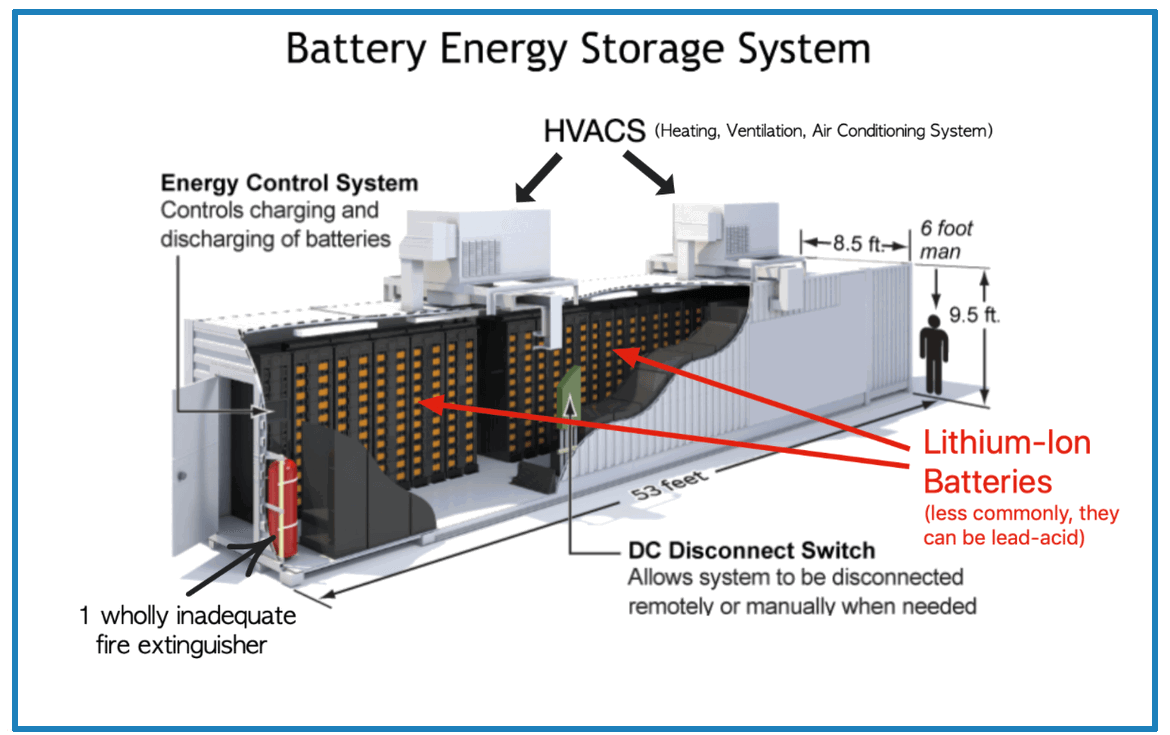
Credit: Innoliaenergy
Key Features of Battery Energy Storage Systems (BESS)

Types of Battery Energy Storage Systems (BESS)
- Solid-State Batteries: Emerging technology with higher energy density and enhanced safety.
- Flow Batteries: Ideal for long-duration energy storage with better cycle life and stability.
- Sodium-Sulphur (NaS) Batteries: Suitable for large-scale grid applications with efficient thermal management.
- Lead-Acid Batteries: Cost-effective option with a shorter lifespan and lower efficiency.
- Lithium-Ion Batteries: Most widely used due to high efficiency, fast response time, & long cycle life.
- Chemical Energy Storage: Stores energy in chemical bonds rather than electrical energy.
Need for BESS in India
- Growing Renewable Energy Capacity: India targets 280 GW of solar and 140 GW of wind energy by 2030. BESS ensures the efficient storage of surplus renewable energy.
- Grid Stability & Reliability: The intermittent nature of renewables can disrupt power networks. BESS acts as a buffer, absorbing fluctuations and ensuring a stable, reliable energy supply.
- Peak Load Management: BESS enables efficient load shifting, balancing electricity demand by storing excess power during off-peak hours and supplying it during peak demand, reducing grid stress.
- Energy Security & Import Reduction: Reduces reliance on imported fossil fuels & coal-based power. With India’s oil import dependency reaching 88.1% in 2024, BESS strengthens energy self-sufficiency.
- Electric Vehicle (EV) Integration: Supports battery swapping stations and charging infrastructure, ensuring a sustainable and uninterrupted power supply for India’s growing EV ecosystem.
Challenges in BESS Deployment
- High Capital Costs: Expensive technology due to import dependency; requires domestic manufacturing and cost incentives.
- Supply Chain Constraints: Reliance on imported lithium, cobalt, and nickel affects sustainability.
- Infrastructure Gaps: Limited large-scale battery storage hampers grid integration.
- Environmental Concerns: Poor disposal and recycling cause soil and water contamination.
- Efficiency & Degradation: Battery performance declines over time, increasing replacement costs.
- Regulatory & Policy Uncertainty: Inconsistent policies and lack of clear incentives slow investment.
- Safety Risks: Thermal runaway and fire hazards in lithium-ion batteries pose operational challenges.
Government Initiatives & Policies Supporting BESS
- National Energy Storage Mission (NESM): Aims to make India a global hub for energy storage with domestic manufacturing and large-scale deployment.
- PLI Scheme for Advanced Chemistry Cells (ACC): ₹18,100 crore allocated to boost domestic battery manufacturing and reduce import dependency.
- Viability Gap Funding (VGF) for BESS: ₹3,760 crore approved for 4,000 MWh of BESS projects to lower costs and improve viability.
- Energy Storage Obligation (ESO) & Time-of-Day (ToD) Tariffs: Mandates storage-backed renewables and promotes BESS use for peak load management.
- Pumped Hydro Energy Storage (PHES) & RTC Policy: Supports concessional financing for PHES and mandates RTC tenders with storage integration.
- Green Hydrogen & Solar-Wind Hybrid Policy: Promotes BESS for green hydrogen and hybrid renewable projects for round-the-clock (RTC) power.
- Others: FAME Initiatives, Draft National Energy Storage Framework, and SECI & NTPC’s BESS Pilot Projects, aiding storage deployment and grid stability.
Way Forward
- Scaling Up Domestic Manufacturing: Establish lithium-ion gigafactories under Make in India and promote alternative chemistries like sodium-ion and solid-state batteries.
- Ensuring Supply Chain & Mineral Security: Secure lithium and cobalt through global trade partnerships while boosting domestic mining in Rajasthan and Karnataka.
- Driving Cost Reduction through R&D: Increase public-private R&D funding for high-energy-density batteries and support startups in low-cost, sustainable storage solutions.
- Expanding Energy Storage Infrastructure: Develop battery storage parks in renewable energy zones and integrate BESS into smart grids and microgrids.
- Strengthening Battery Recycling: Implement strict recycling policies, promote second-life applications, and invest in eco-friendly disposal solutions.
- Enhancing Policy & Financial Incentives: Expand Viability Gap Funding (VGF), introduce time-of-day tariffs, and provide tax benefits to accelerate BESS adoption.
BESS will drive India’s shift from energy poverty to energy prosperity, ensuring sustainability and grid resilience. With strong policy and innovation, India can lead in clean energy storage & achieve its net-zero goals.
Reference: Financial Express
PMF IAS Pathfinder for Mains – Question 103
Q. With India aiming for 500 GW of non-fossil fuel capacity by 2030, discuss the significance and challenges of Battery Energy Storage Systems (BESS) in ensuring energy security. (150 Words) (10 Marks)
Approach
- Introduction: Define Battery Energy Storage Systems (BESS) and highlight their role in ensuring energy security amidst India’s 500 GW non-fossil fuel target by 2030.
- Body: Discuss the significance & challenges of Battery Energy Storage Systems (BESS) in Energy Security.
- Conclusion: Write an appropriate conclusion highlighting crucialiaty of Battery Energy Storage Systems.


