

Mushrooms into Gold Nanoparticles
- Context (IE): Researchers in Goa have successfully synthesized gold nanoparticles from mushrooms of the Termitomyces species, locally known as ‘roen olmi’.
- This discovery pioneers the use of an eco-friendly species for mass production of gold nanoparticles.
Termitomyces
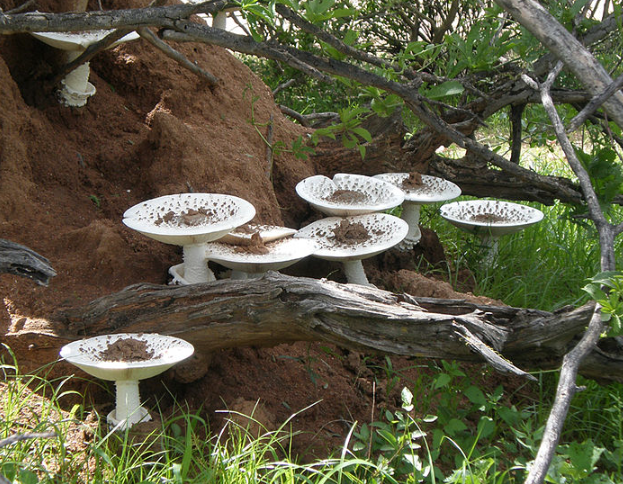
- Termitomyces is a fungi belonging to the family Lyophyllaceae.
- It is the largest edible mushroom in the world, and its cap reaches 1 metre (3.28 ft) in diameter.
- These mushrooms are often associated with termite nests or mounds, where they grow in symbiotic relationships with termites.
- They are commonly found in regions with warm and humid climates, such as tropical forests and savannas.
- They contain bioactive compounds with antioxidant, antimicrobial, and immunomodulatory properties, which may have health benefits.
Gold Nanoparticles
- Gold nanoparticles are tiny particles of gold that range in diameter from 1 to 100 nanometers.
Properties
- Optical Properties: Gold nanoparticles display vibrant colours ranging from red to purple, depending on their size and shape. This phenomenon is known as surface plasmon resonance.
- Electronic Properties: They possess excellent electrical conductivity, making them useful in electronics and sensor applications.
- Chemical Properties: Gold nanoparticles have a high surface area, which enhances their reactivity and makes them suitable for catalysis and surface chemistry.
Applications
- Electronics: Nanoscale gold nanoparticles are being used to connect resistors, conductors, and other elements of an electronic chip.
- Photodynamic Therapy: Near-IR absorbing gold nanoparticles produce heat when excited by light at wavelengths from 700 to 800 nm. This enables these nanoparticles to eradicate targeted tumors.
- Therapeutic Agent Delivery: Therapeutic agents can be coated onto the surface of gold nanoparticles due to their large surface area-to-volume ratio.
- Sensors: Surface enhanced Raman spectroscopy, exploit gold nanoparticles as substrates to enable the measurement of vibrational energies of chemical bonds.
- Probes: Gold nanoparticles also scatter light and can produce an array of interesting colors under dark-field microscopy. The scattered colors are currently used for biological imaging applications.
- Diagnostics: Gold nanoparticles are also used to detect biomarkers in the diagnosis of heart diseases, cancers, and infectious agents.


